
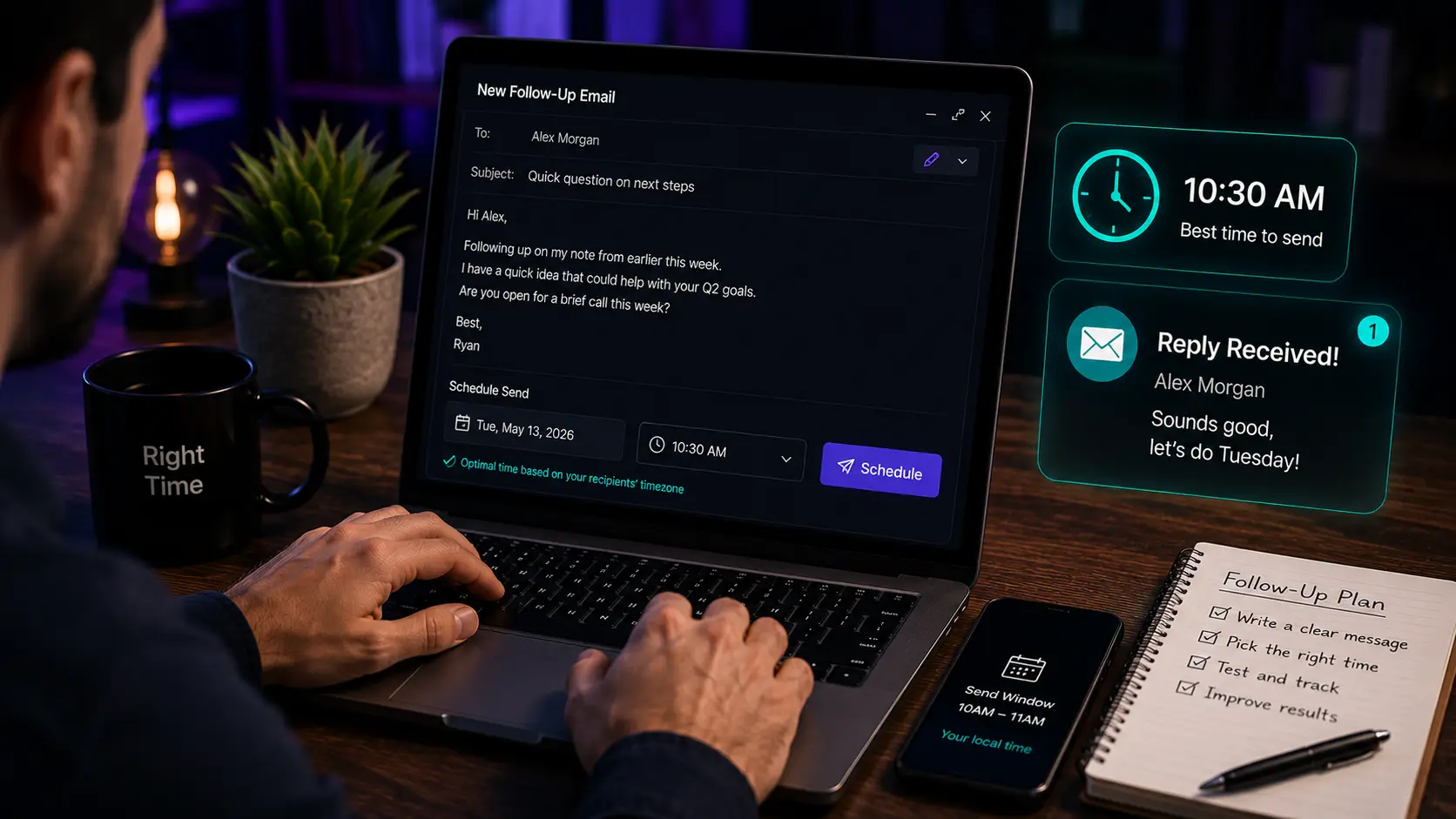
The best time to send a follow up email can raise your reply rate before you write a single line. Timing is a quiet lever, and most people ignore it. We have watched strong notes flop because they landed at 6pm on a Friday. So when you press send matters, sometimes as much as what you say.
Still, timing is not magic. It nudges the odds, and it works best beside a clear message. So this guide covers the best day to send follow up email, the ideal hours, and how follow up email timing shifts across a sequence. Let us dig in.
Best Day of the Week to Send a Follow-Up Email
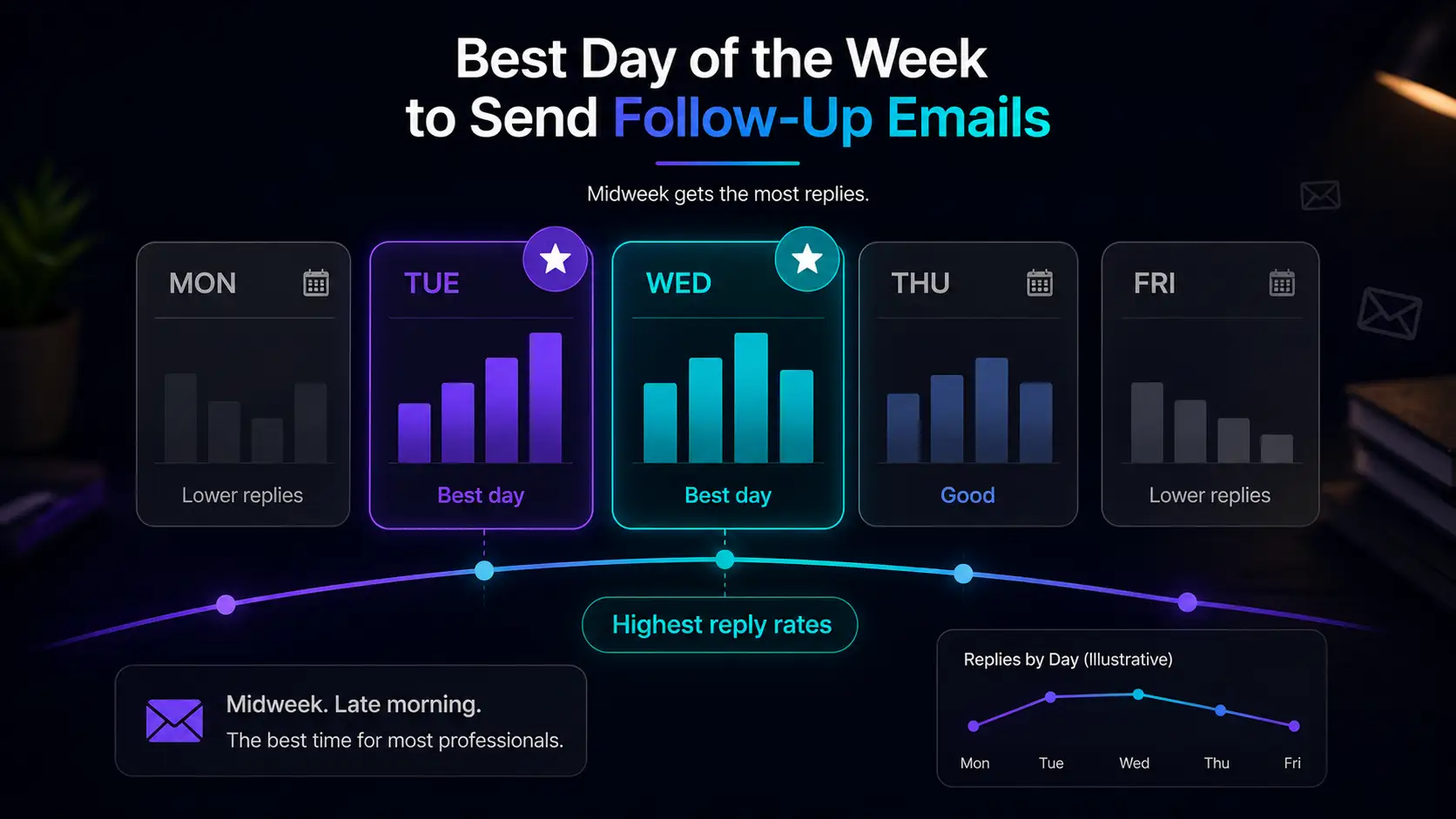
Knowing when to send a follow up email starts with the calendar. Mid-week days tend to test well in many B2B datasets. So Tuesday and Wednesday often top the list, while Monday chaos and Friday drift pull replies down.
But your audience beats any average. So check your own email timing statistics first. A founder reads at odd hours, while a procurement lead sticks to a routine. As a result, the best day depends on who sits in the inbox.
B2B email timing carries its own rhythm. Buyers work office hours, so weekday sends fit their routine. So the best time to send a follow up email to a business often sits inside the standard nine-to-five window. And that simple rule beats chasing clever, off-hours tricks.
Weekends split the room. Some quiet inboxes make your note stand out, yet many buyers unplug fully. So we treat weekend sends as a test, not a default. In short, start mid-week, then let your data adjust the sending schedule.
Seasons shift the pattern too. Quarter-end weeks run hot, while holiday stretches go quiet. So we log the calendar next to every reply. Over time, that habit shows the best day for our own list, not a generic chart.
Best Time to Send a Follow Up Email, by Hour
The best time to send a follow up email, by hour, usually clusters around the morning. Late morning tends to catch people after the first inbox sweep. So aim for a window before lunch, when attention is fresh but the day is underway.
The open rate by time of day is not flat. Early morning sends can get buried under the overnight pile. Meanwhile, mid-afternoon often sees a second, smaller peak. So we test two windows and compare the email send time data side by side.
Time zones matter as much as the clock. A 10am send in one region lands at dawn in another. So we schedule by the reader's local time, not ours. As a result, the note arrives when the inbox is actually open.
Below is a directional 2026 benchmark to validate against your own numbers. These figures are illustrative, not cited research, so confirm them before you publish.
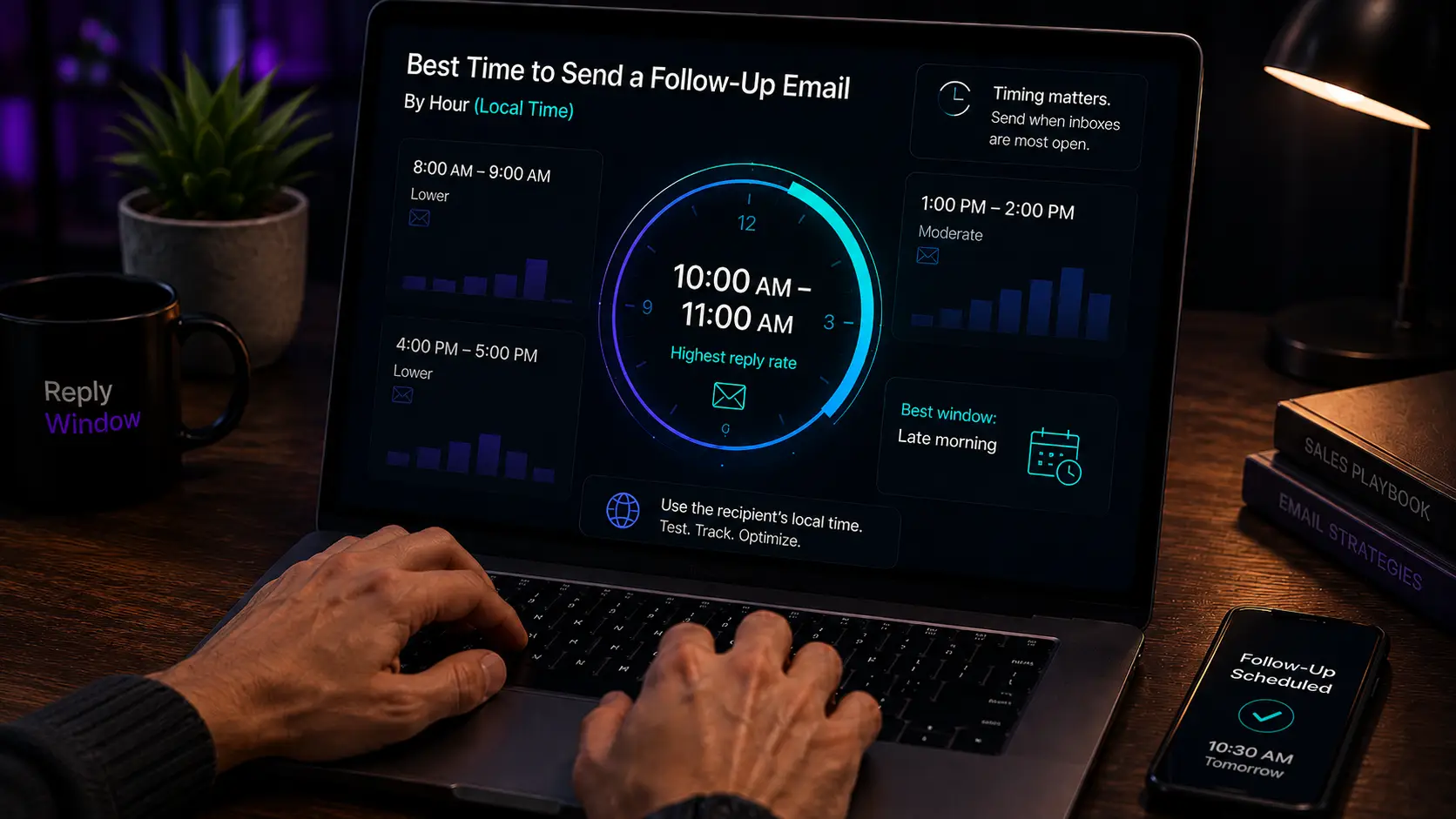
| Send Window (Local) | Directional 2026 Reply Rate | Notes |
|---|---|---|
| 8am to 9am | Lower | Buried under overnight mail |
| 10am to 11am | Highest | Post-sweep, fresh attention |
| 1pm to 2pm | Moderate | Post-lunch second peak |
| 4pm to 5pm | Lower | End-of-day drift |
The takeaway is simple. Late morning is a strong default for sales email timing, but your list is the real judge. So test, log, and repeat. So we start with the benchmark, and then we let real replies rewrite it. And that loop turns a rough guess into a reliable, repeatable window for our audience.
How Timing Changes by Follow-Up Number
Timing shifts as a sequence grows. A first nudge can land a day or two after your original note. However, later touches need more room to breathe. So we widen the gap with each send, since patience reads as respect.
The best time to follow up on a third or fourth touch is rarely the next morning. Space them across days, not hours. As a result, you stay present without crowding the reader. For the full cadence, timing, and templates, read our guide on how to write a follow up email.
This is also where a tool earns its keep. We use Continuas AI to read each thread and suggest the right send moment, so the timing comes from the conversation, not a fixed date. So the guesswork drops, and the reader gets a note that feels well judged.
Later touches also change in tone. A gentle exit works well near the end. So the ideal time for follow up email number five pairs with softer wording. And that mix of timing and tone keeps the door open.
Does Timing Really Matter More Than Message?
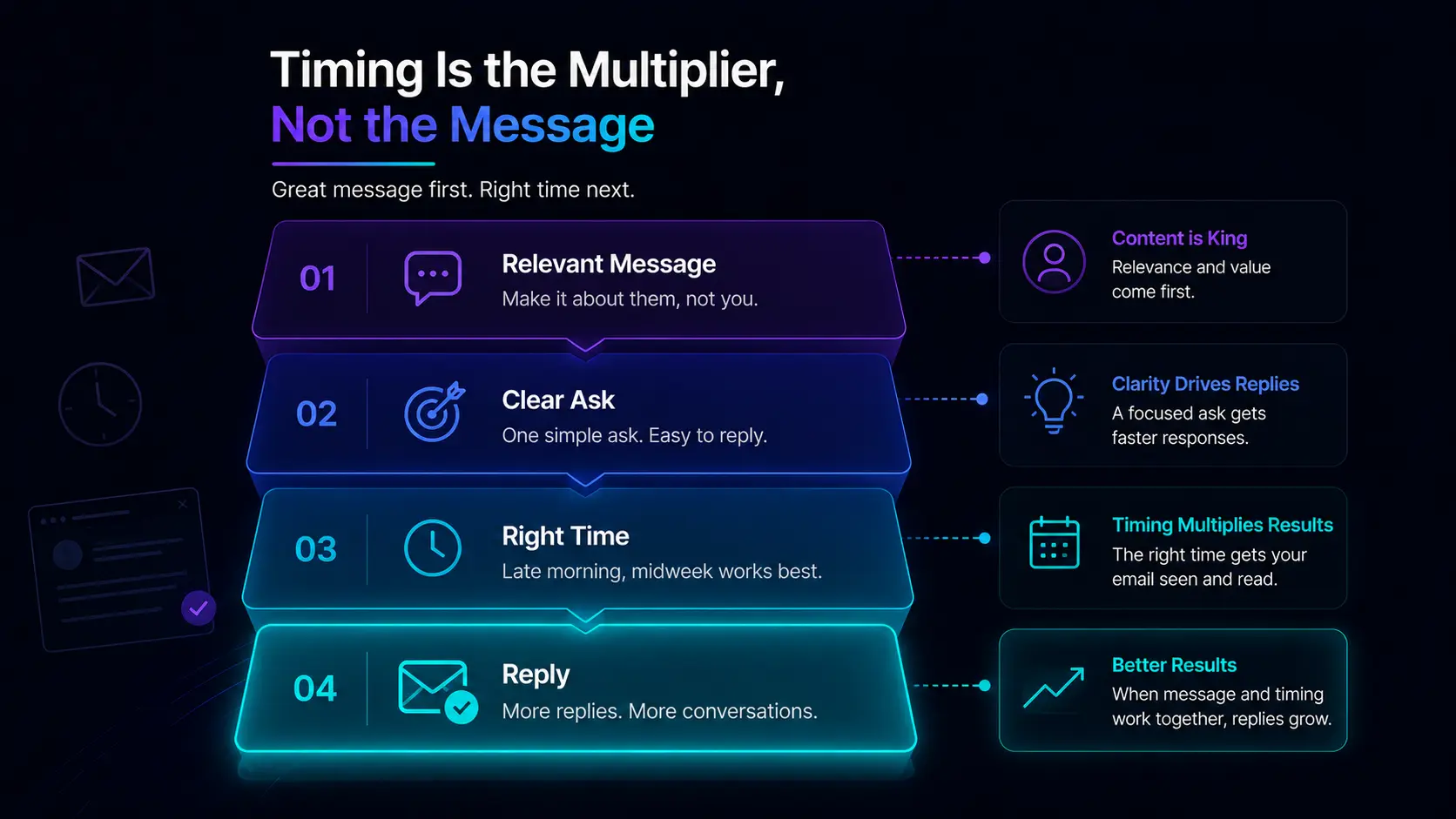
Timing helps, but it does not carry a weak note. So we rank message first and timing second. A sharp reason to reply beats a perfect hour every time. In the same vein, poor wording sinks even a well-timed send.
Think of the response rate factors as a stack. Relevance sits on top, then a clear ask, then timing, then day. So we fix the words first, and we treat communication timing as the multiplier. That order keeps our email optimization grounded in what actually moves replies.
Good email marketing data proves this out. Teams that nail the message see gains across every send window. So timing lifts a strong note, yet it cannot save a hollow one. Above all, earn the reply, then optimize the clock.
Here is the honest summary. The best time to send a follow up email only pays off when the words already deserve a reply. So we draft a clear, warm note first. Then we schedule it for the window our data likes best. And that order keeps results steady, not lucky.
Frequently Asked Questions
Conclusion
The best time to send a follow up email is a mid-week late morning, tested against your own list. So start there, log your results, and let the data refine your sending schedule. As a result, more notes get seen, and more replies come back.
Timing is the multiplier, not the message. So write for the reader first, then optimize the clock. Grab our free follow up template kit and read the complete pillar guide to keep every send sharp.