
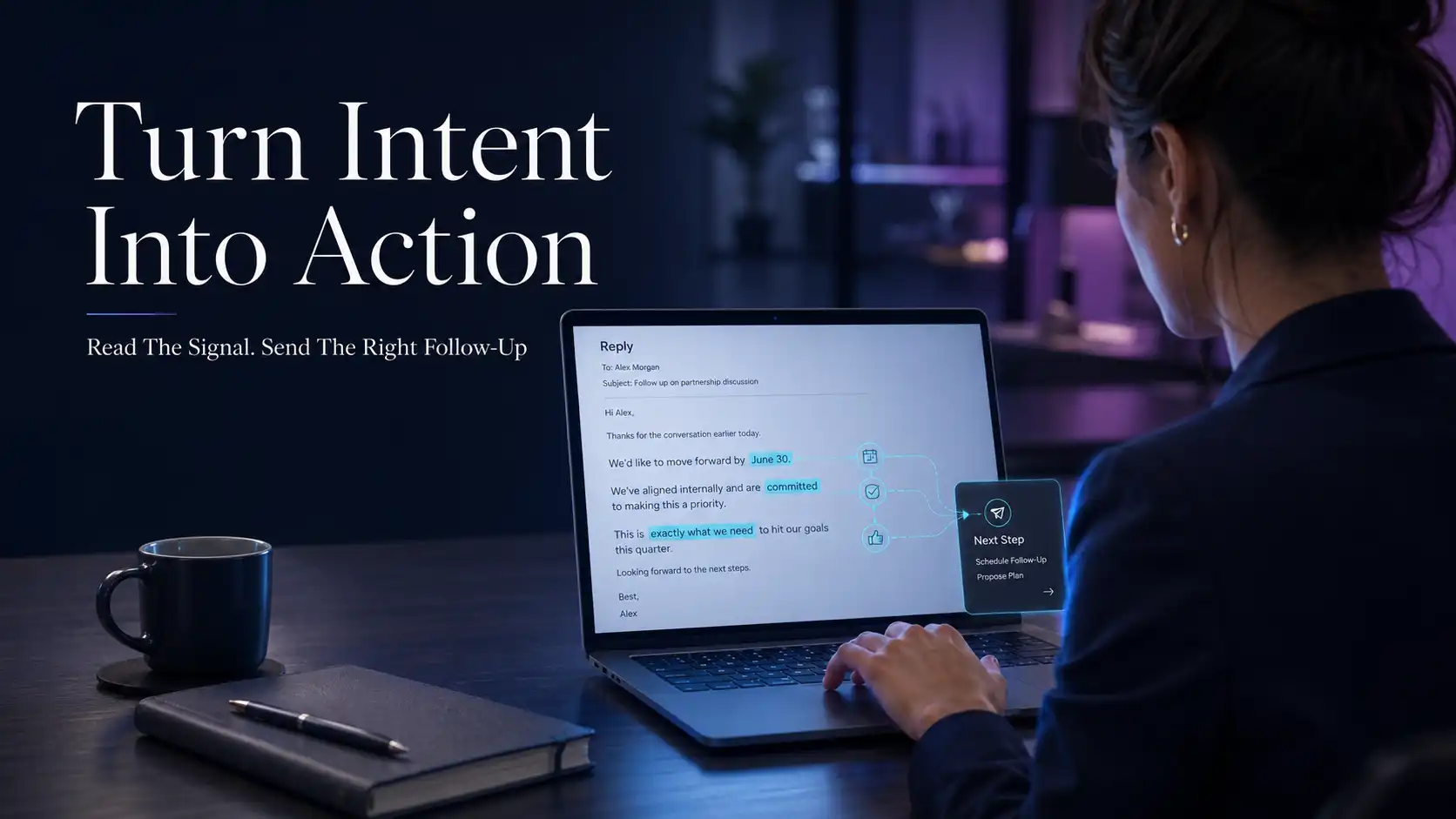
Buying signals hide in almost every reply a buyer sends, and missing them is how good deals quietly stall. A prospect writes back with real intent and a deadline. So this is the moment that decides the sale. And too often, it is also the moment things fall apart.

The Reply Is Where Deals Are Won or Lost
A reply is not just a message. It is a map. Inside it sit commitments, deadlines, and clues about where the buyer's head is at. So the rep who reads it well knows exactly what to do next. And the rep who skims it misses the whole point.
Think about a line like "send pricing by Friday, and the board reviews next week." That one sentence holds a promise, a deadline, and a milestone. So it is packed with direction. But under a pile of other emails, it is easy to read fast and lose the thread.
And speed changes everything here. A buyer who just showed intent is warm right now. But that warmth fades within days. So a fast, sharp reply rides the momentum. And a slow one lets the deal cool before anyone acts.
The Hidden Cost of a Missed Signal
Missing a signal is expensive. Around 80% of deals need five to twelve touches before they close. Yet 92% of reps stop after four. So a buyer who showed clear intent often gets no reply at the exact moment they were ready. And that silence, right after a strong signal, is how winnable deals slip away.
How to Read Buying Signals in a Reply
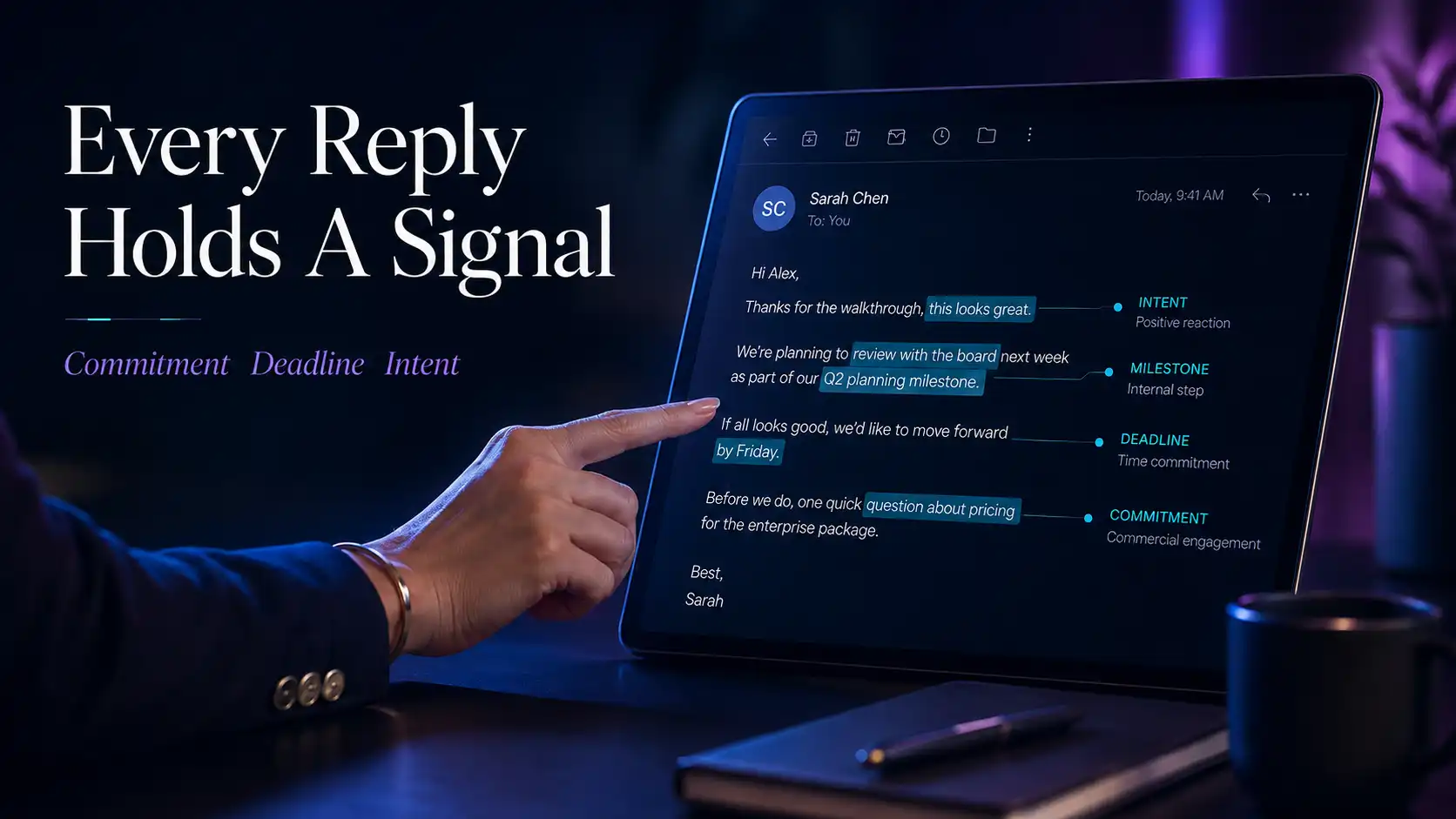
Reading buying signals is a skill, and it comes down to three things. Firstly, catch the commitments, the things either side promised to do. Secondly, mark the deadlines, the dates that set the pace. After that, note the intent, the language that shows how close the buyer is to a yes.
So a single reply breaks down into a clear picture. "Send pricing by Friday" is a commitment with a deadline. "Review with the board" is a milestone. "This looks great" is decision-stage intent. And once it is structured like that, the next move is obvious.
| What a Reply Contains | The Buying Signal It Sends |
|---|---|
| "Send pricing by Friday" | A commitment with a hard deadline |
| "Review with the board" | A milestone and a real timeline |
| "This looks great" | Decision-stage intent, close to yes |
| A question about the number | Price focus, ready to compare |
Turning Buying Signals Into a Plan
Spotting buying signals is only half the job. The other half is acting on them at the right time. So a good plan is specific. It picks the send time when the buyer actually opens email. It leads with the number they asked about. And it lines up the message a day before their big meeting, not after.
That timing turns a signal into momentum. And the plan should be concrete, not vague. So a note to "follow up soon" is useless. Instead, it names the day, the hour, and the opening line.
The Right Message at the Right Moment
So timing and content have to work together. A perfect message sent at the wrong hour still gets buried. So the play is to send when the buyer reads, and to open with what they care about most. Lead with the price they asked for. Then close with a clear next step, like a time to talk.
And risk matters too. If there is no champion on the finance side, a smart follow-up plants that intro early. So the deal does not stall later on a missing contact. So reading the thread this way turns a plain reply into a real strategy.
Now think of each reply as a short window. It opens the second the buyer hits send. Then it starts closing as their attention moves on. So the goal is to land the next message while the window is still wide. And that means reading the thread fast and acting even faster.
From Draft to Sent in One Tap
A plan is useless if the message takes an hour to write. So the draft should already be waiting, written in the rep's own voice and timed to the buyer. "Pricing attached. The number you asked about is on page one. Happy to walk finance through it." One read, one tap, and it is gone. So nothing slips, and nothing gets forgotten.
And this is where most tools stop short. They remind a rep to follow up, but they leave the writing to the rep. So the reminder just adds one more chore. But a ready draft removes the work entirely. So the follow-up actually happens, instead of sitting on a to-do list.
Frequently Asked Questions
Turn Intent Into Action With Continuas
At Continuas, we read every reply the way a closer would. We catch the buying signals, the commitments, and the deadlines, then build the play and draft it in your voice. So a message goes out at the moment it lands best, a day before board prep, not a week too late.
Our relationship intelligence turns a plain reply into a sent follow-up in one tap, so nothing slips and the deal keeps moving. Turn intent into action, and watch more replies become closed deals.