
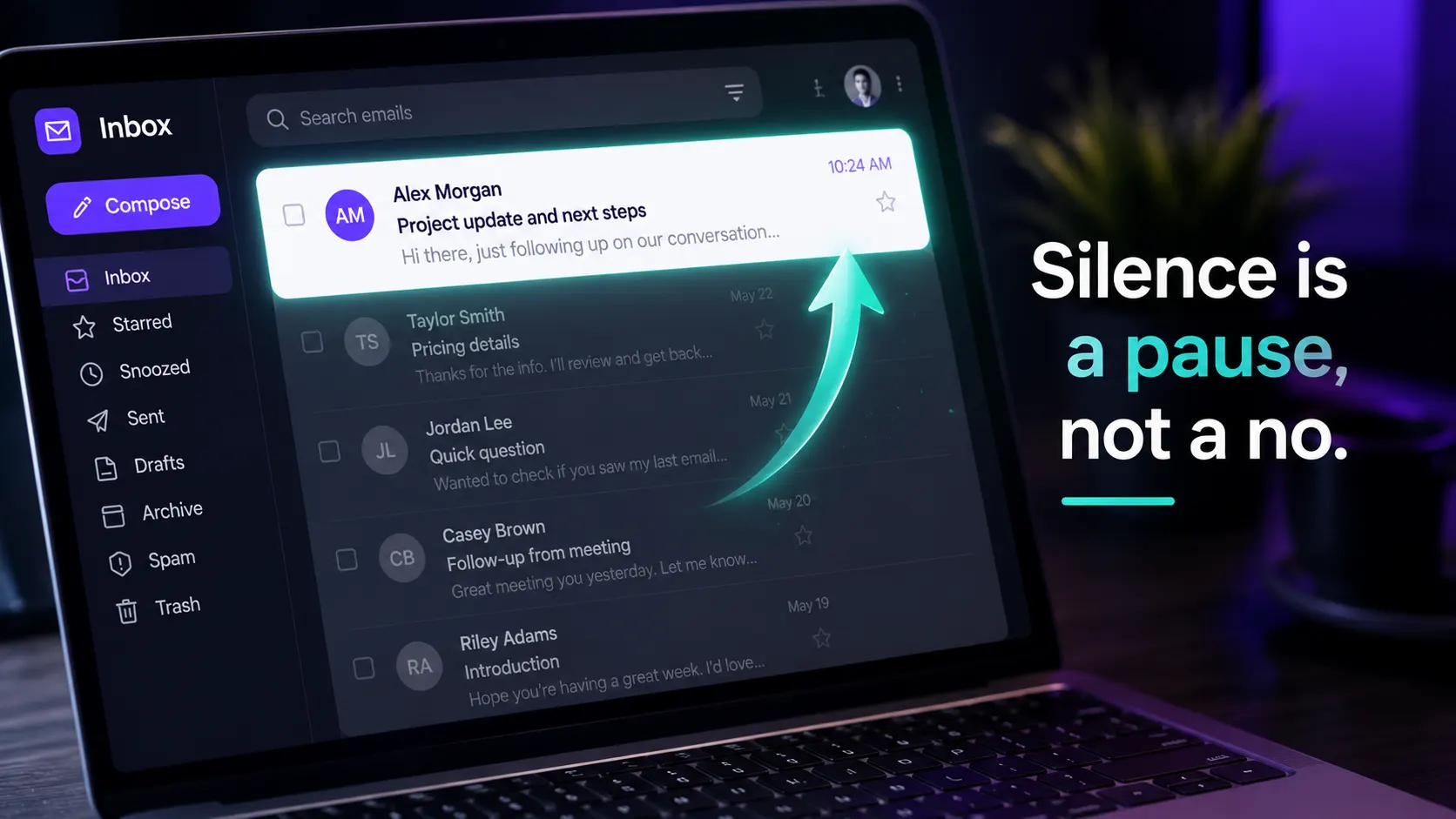
A follow up email after no response feels awkward, so most of us send one weak note and then give up. But silence is not a no. It is a pause, and a pause can be restarted. So the real skill is knowing what to say next, and when to say it. We wrote this guide to walk you through the whole sequence, from the first gentle nudge to the final break-up note.
Think of this as the strategic, start-to-finish version. We will cover why buyers go quiet, how long to wait, and exactly what each message in the chain should do. So skim to the part you need, or read it straight through and build your own repeatable system.
Here is the honest promise. By the end, sending a follow up email after no response will feel less like a chore and more like a habit you trust. We will show you the timing, the wording, and the full sequence, so you never freeze at a blank screen again.
So let us keep the theory light and the examples practical, since that is what actually moves a reply into your inbox.
Why Prospects Go Quiet (It's Rarely About You)
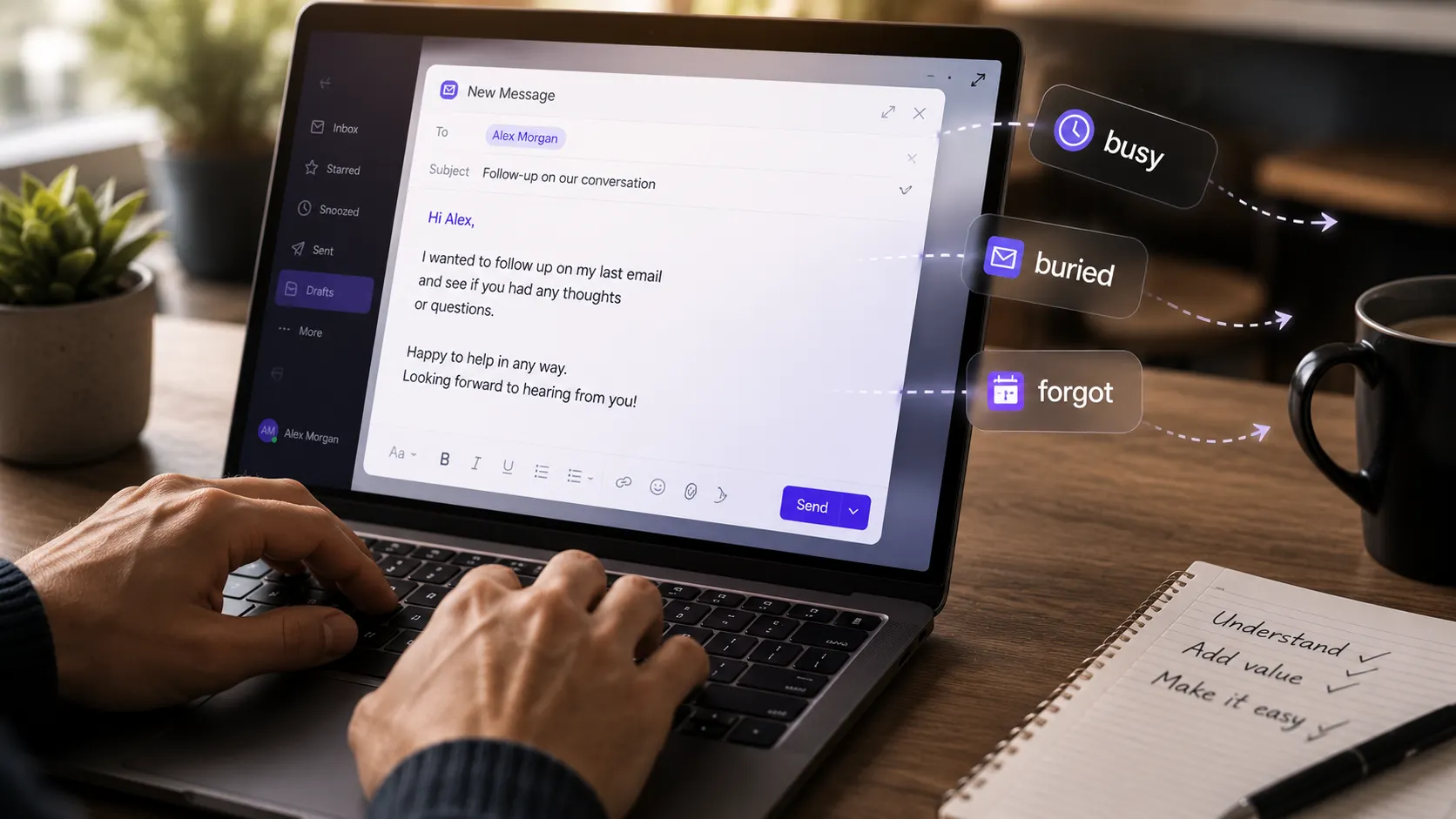
Here is the good news. When a prospect stops replying, it is almost never personal. They got busy. A bigger fire pulled their focus. Your note slid down a crowded inbox. So the deal did not die on purpose. It simply drifted.
Silence in sales is normal, not a verdict. A ghosted prospect today can become a signed deal next month, because timing changes and priorities shift. So we stop reading rejection into every quiet week, and we start treating each gap as a memory problem instead.
An unresponsive lead usually needs a reason to re-engage, not a guilt trip. So we keep the door open and stay useful. That mindset protects your deal momentum, and it keeps every message warm rather than needy. Above all, patience here reads as confidence.
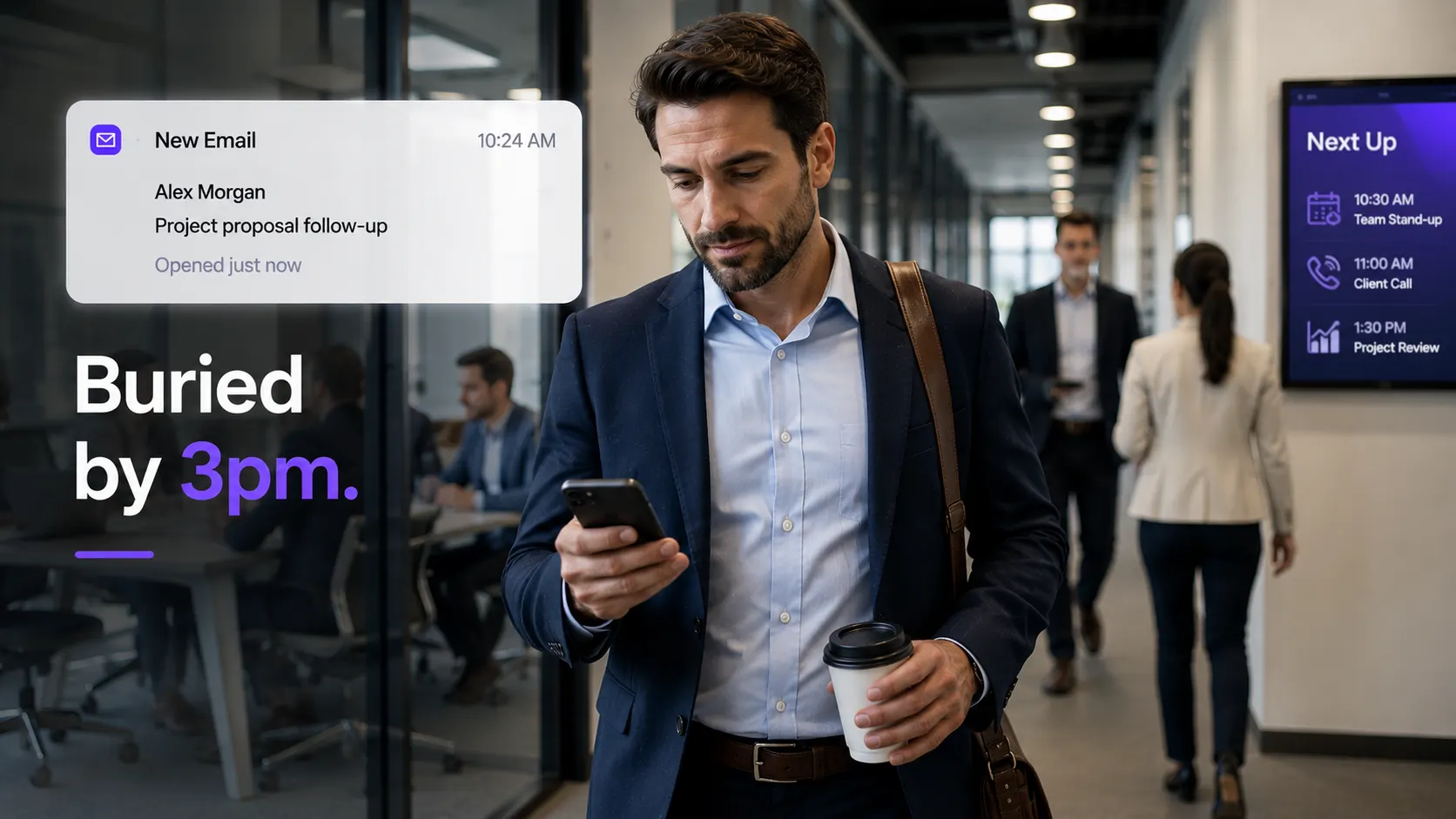
It helps to picture the buyer's day. They open your note between two meetings, mean to reply after lunch, then twenty new emails bury it by 3pm. So the silence is not a decision. It is just life in a busy inbox.
Once we accept that, a follow up email after no response stops feeling risky and starts feeling like a normal part of the sales outreach process. We are simply reminding a busy person of something they already cared about.
How Long to Wait Before Following Up
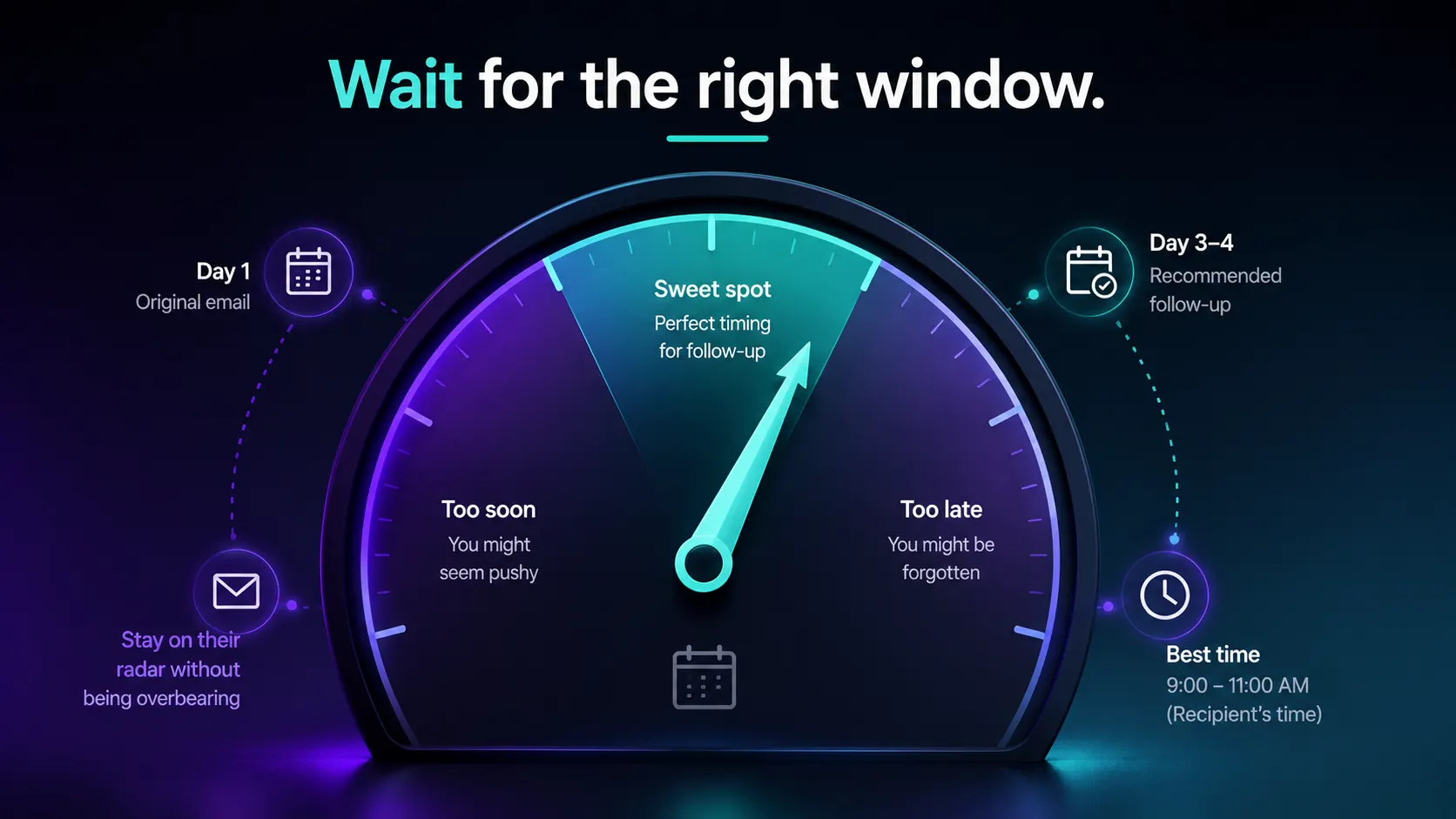
Timing trips up a lot of sellers. Send too soon, and you look anxious. Wait too long, and you fall off their radar. So we aim for the sweet spot in between.
After a meeting or a warm reply, we follow up within one to two business days while the talk is still fresh. For a colder thread, we wait three to four days before the first nudge. Then we widen the gap each time, so touches land without crowding the inbox.
The best window depends on the buyer, not a fixed calendar. Signals like opens, clicks, or a promised update tell you more than any generic rule. So watch the thread itself. We break down the science of send timing, including the best days and hours, in our dedicated timing guide.
One caution on speed. A follow up email after no response that lands an hour later can feel frantic and needy. So we give the reader room to breathe. A short wait signals respect, and respect earns replies. However, waiting weeks is just as risky, because you fade from memory. So we split the difference and let the buyer's own signals nudge us earlier or later.
How to Send a Follow-Up Email After No Response, Step by Step
Knowing how to send a follow up email after no response is really about structure, not clever words. So we use the same simple frame every time, then fill it with a detail only that the buyer would recognize. That mix of speed and personalization is what earns replies.
Before we walk through the parts, one rule sits above them all. Every follow up email after no response should feel like a continuation, not a restart. So we always read the last exchange first.
That quick scan reminds us what the buyer cared about and where the ball got dropped. Then our next note picks up the exact thread they remember, which is the whole point of a smart email follow up no response strategy.
Reply to the Thread or Start Fresh?
Most of the time, we reply inside the original email thread. It gives the reader instant context, and it shows we are continuing a real conversation, not launching a cold pitch. So email thread follow up beats a brand-new message in nearly every case.
There is one exception. If the old thread has gone truly stale, or the subject line no longer fits, a fresh email with a sharp new hook can work better. So we judge by the situation. When in doubt, though, we stay in the thread they already know.
Structuring the Message
A strong no response follow up email has a clear shape. So we build each one from the same parts, in the same order, and we keep it short enough to read in ten seconds.
Subject Line
Keep it short and tied to the last thread. We often reuse the original subject or add a light nudge, since a fresh clever line can feel like a stranger knocking. So the subject earns the open, and the open earns the read.
Opening and Reminder
Skip the long wind-up. We name why we are back in one line, and we tie it to something real they said. So instead of "just checking in," we write "you mentioned budget sign-off this week, so I wanted to send the numbers."
New Angle and CTA
Never resend the same message twice. So each note adds a new angle, a fresh stat, a case study, or a simple question. Then we close with one clear ask. A single, easy next step gets a fast yes, and a fast yes keeps the deal alive.
Keep the whole message short. Three or four tight sentences beat a long paragraph every time, because busy readers skim. So we cut every word that does not earn its place.
A follow up email after no response should feel like a quick, friendly tap on the shoulder, not a formal letter. When we trim hard and ask for one thing, replies climb. That restraint is the quiet secret behind a strong sequence.
What to Send at Each Stage of the Sequence
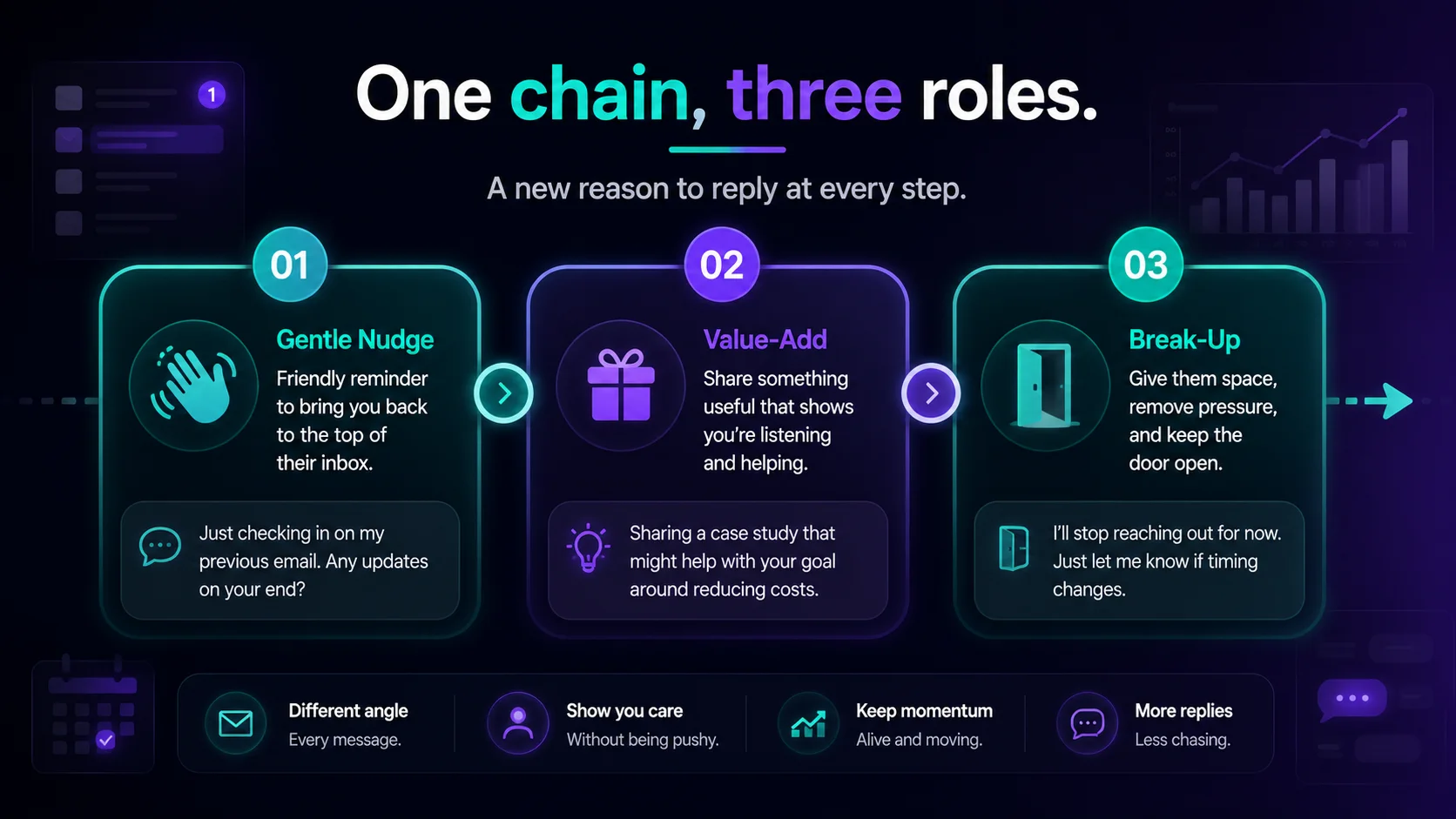
One message rarely does the job. So we plan a short sequence, where each note plays a different role. That way, resending a follow up never feels repetitive, and the reader always gets something new.
The Gentle Nudge (1st Follow-Up)
The first follow-up is light and friendly. We simply float back to the top of their inbox and remind them where we left off. So we keep it warm, short, and free of pressure. No guilt, no urgency, just a helpful bump.
This note assumes the best. They meant to reply and forgot, so we make replying easy. A one-line reminder plus a simple question does the trick. That gentle touch respects their time and keeps the relationship warm.
Timing matters most here. A first follow up email after no response works best a few days after the original, while the topic still feels current. So we resist the urge to pounce the next morning. A calm, well-timed nudge almost always beats an anxious, early one. And if they open it but stay quiet, that is a green light to keep going, not a reason to quit.
The Value-Add Follow-Up (2nd Follow-Up)
If the nudge gets silence, the second follow up email brings something useful. So we share a relevant case study, a quick tip, or an answer to a question they raised earlier. Give before you ask, and the note stops feeling like nagging.
This stage is where lead nurturing really happens. We prove we were listening, and we add real value with no strings attached. So even if they are not ready to buy, they remember us as helpful. That memory pays off later.
The value-add note is also the hardest to get wrong. A follow up email after no response that teaches something rarely feels pushy, because it gives more than it takes. So we lead with the gift and bury the ask at the bottom. A short, useful insight plus a soft question is the winning shape. Meanwhile, we keep it brief, since a wall of text undoes all the goodwill.
The Break-Up Email (Final Follow-Up)
When several notes get nothing, we send the break-up email. So we politely signal that this is the last touch for now. Strangely, this message often gets the highest reply rate of the whole chain, because it removes all pressure.
We keep it kind and open-ended. A line like "I will stop reaching out for now, but just say the word if timing changes" gives the reader an easy out. So the door stays open, and prospect re-engagement becomes simple whenever they are ready.
Why does the break-up note work so well? It flips the pressure. Suddenly the reader feels the deal slipping, and loss is a stronger motivator than gain. So a final follow up email after no response often pulls replies that three earlier notes could not. Even when it does not, it closes the loop cleanly, which keeps your pipeline honest. So we never skip this step, no matter how quiet the thread has gone.
How Many Times to Follow Up Before Stopping
Persistence is a balance beam. Too little, and the deal fades. Too much, and you get muted. So how far is too far?
Our rough rule is simple. We keep going as long as each note adds value and the door has not been firmly shut. Certainly we stop when a buyer says no clearly, or after three to four fresh, useful touches get total silence. Until then, polite sales persistence is professional, not annoying.
The exact number depends on deal size and buyer heat. A hot lead who asked for pricing deserves more attempts than a cold contact from a trade show. So we match our pace to their signals. We dig into the full stopping rule in our guide on how many follow-ups a deal really needs.
People often ask us how to follow up when no response comes after several tries. The answer is variety, not volume. So we rotate our angles, a helpful article one week, a customer story the next, a simple question after that. Each note earns its place. As a result, the reader never feels chased, only helped, and helped people tend to answer.
Get the Full No-Response Sequence (Free)
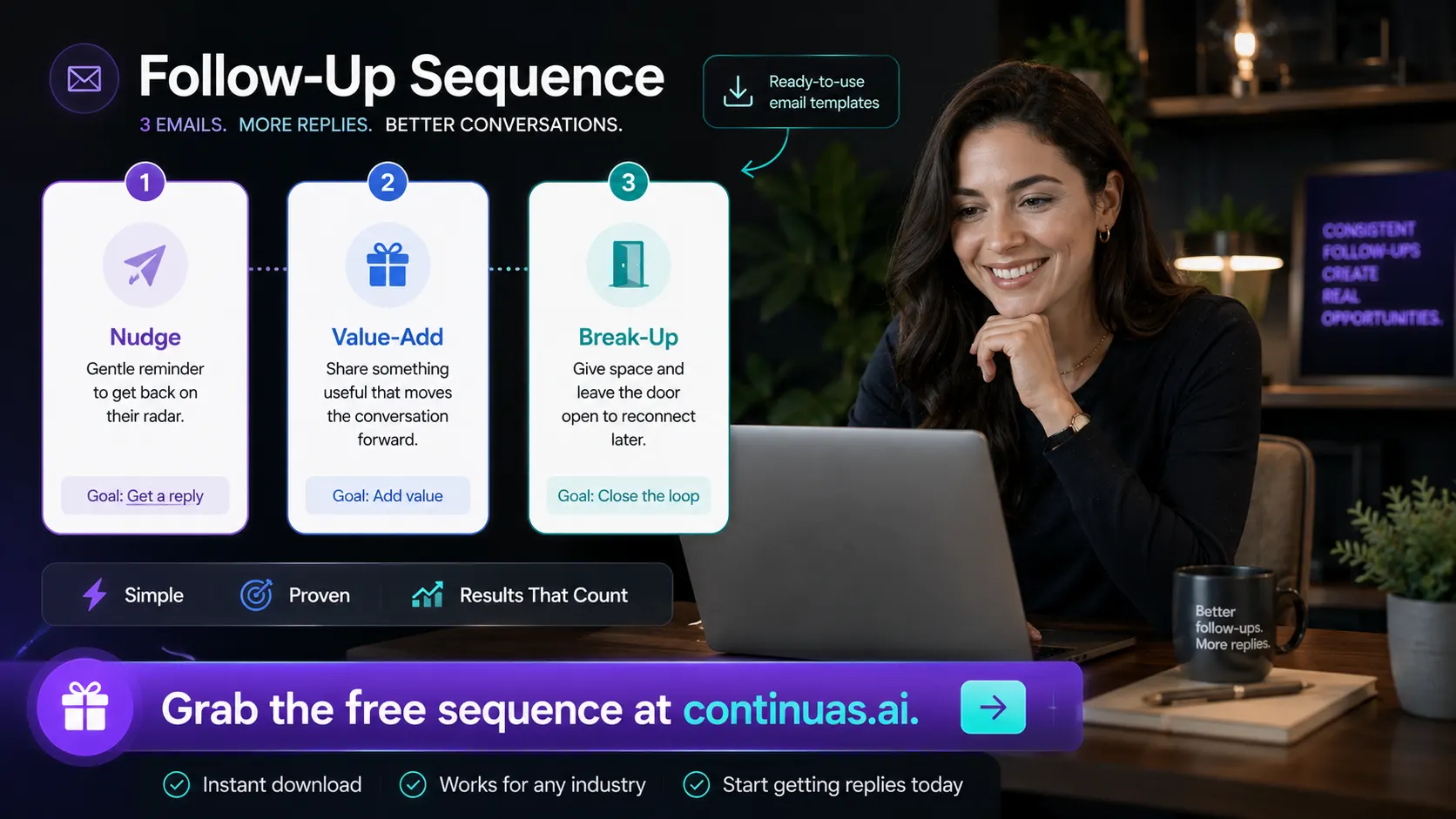
Building each note from scratch eats your week. So we packaged the entire chain into a free, ready-to-send sequence you can adapt in minutes. It covers the nudge, the value-add, and the break-up, all following the structure above.
Each template leaves room for one honest, human line, because copy-paste alone never wins. So you keep the speed and add the personal touch. Ready to save some time? Grab the free follow-up sequence and start turning silence into replies today.
Use it as a frame, not a crutch. So study why each line works, then make the words your own. Soon you will draft strong notes without any template at all, and that skill sticks with you for every deal you ever run.
Frequently Asked Questions
Conclusion
A follow up email after no response is not about being clever. It is about being clear, kind, and consistent when everyone else goes quiet. So we plan a short sequence, add value at each step, and give the reader an easy out at the end.
Master this chain, and quiet threads stop feeling like dead ends. Doing it by hand across dozens of deals is the hard part, though. Tracking every thread, remembering each promise, and timing each send eats real hours every week.
So once your volume grows, a system that watches your threads and drafts the next note in your own voice, timed from the conversation itself, quietly carries that load. You still review and send, so nothing leaves your hands unchecked.
Start with the gentle nudge you have been putting off. Then work the sequence, one honest note at a time. We have seen silent threads turn into signed deals again and again, and yours can too.
Remember that this is a skill, and skills grow with reps. Every note you send teaches you what your buyers welcome and what they ignore. So start small, stay consistent, and track what earns replies.
Over a few weeks, the pattern becomes second nature, and the awkwardness fades for good. Silence will still happen, because busy inboxes are a fact of life. But now you have a calm, repeatable answer for it, and that answer keeps your pipeline moving while your competitors quietly give up.