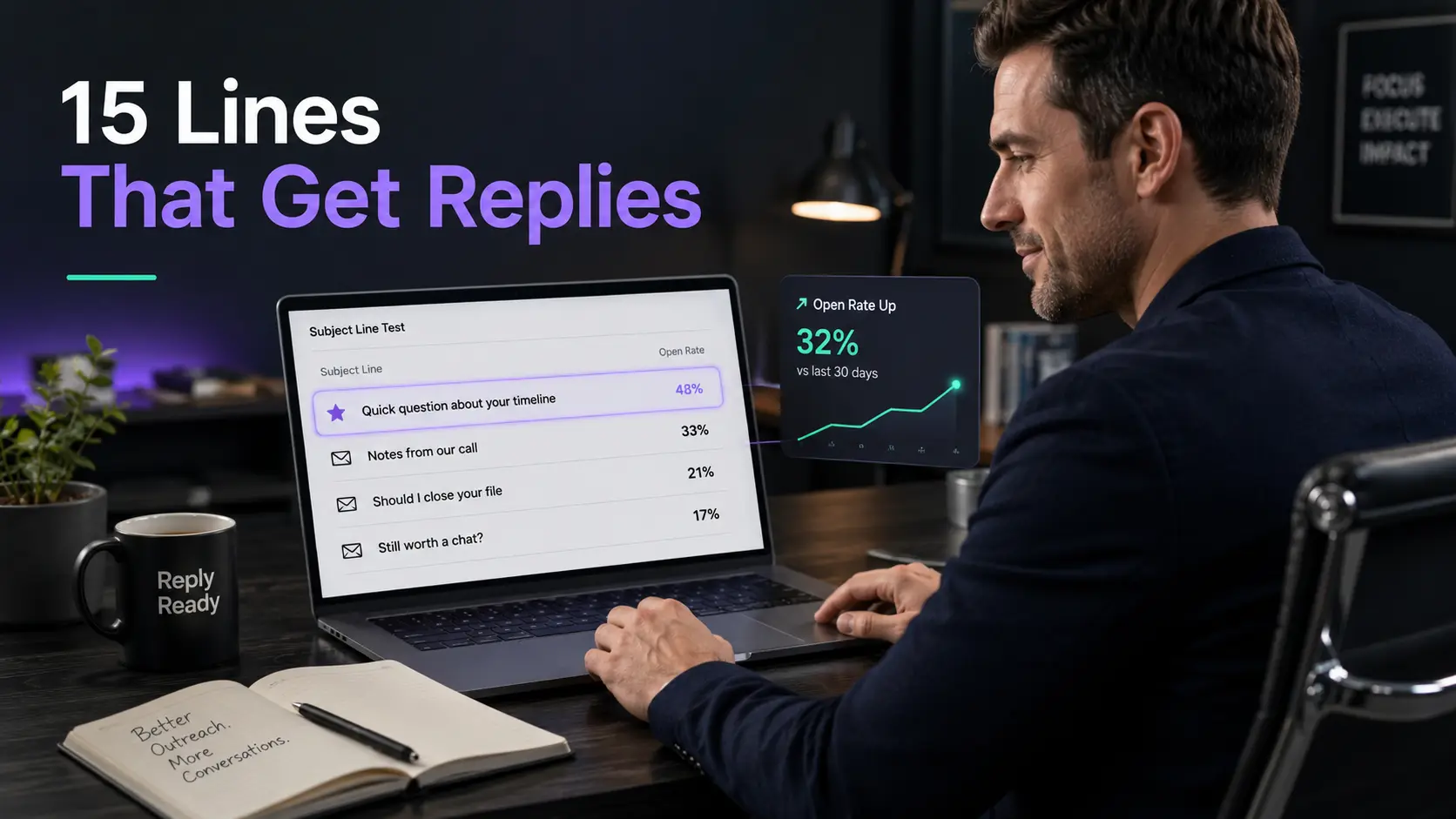
A great follow up email subject line can decide whether your message gets read or lost in the noise. Most replies never arrive because the subject failed, not the pitch. We have watched strong offers die in silence. So the fix has to start at the very top line, and it starts today. And the good news is simple. Small tweaks move real numbers.
You send a thoughtful note. Then nothing happens. So you assume the deal is dead. But most of the time the message never even opened. That is where smart email copywriting earns its keep, and where inbox visibility becomes your quiet advantage.
In this guide we share what actually moves opens. So expect real examples, a simple test process, and lines you can paste today. We wrote it for busy sellers, founders, and recruiters. So skip the theory and take what works.
What Makes a Follow Up Email Subject Line Get Opened
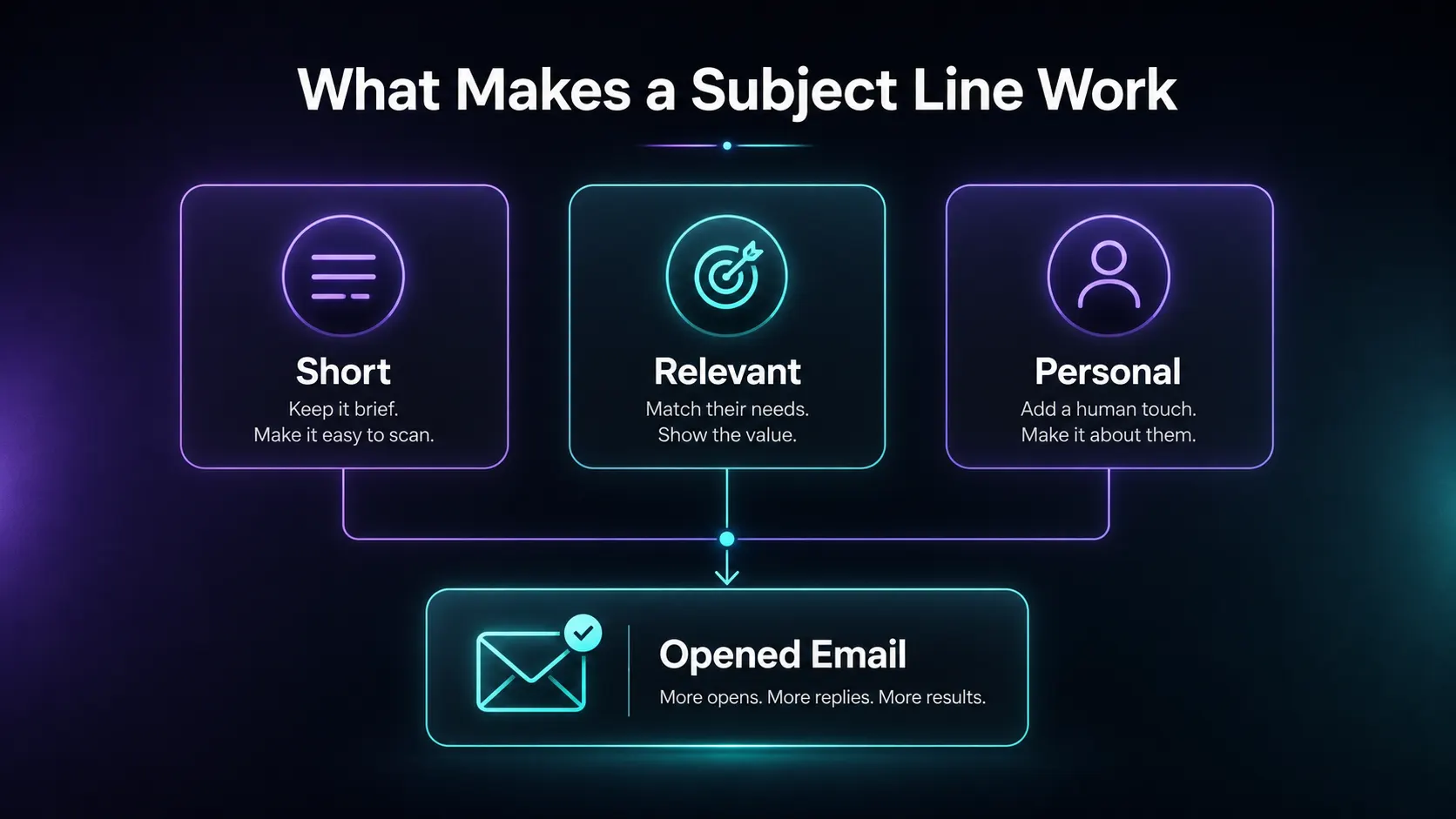
A strong follow up email subject line does three jobs at once. It sparks curiosity, it feels personal, and it respects the reader's time. So we keep every word working. And we cut anything that sounds like filler.
Length matters more than people think. Short lines win on mobile, where most inboxes now live. As a result, we aim for four to seven words. Meanwhile, clarity beats cleverness almost every time.
Timing shapes the open too. Send too soon and you seem needy. Send too late and the thread goes cold. So the best subject line for follow up email work rides on good timing, not luck.
Relevance seals it. Reference the last thing you discussed, and the reader feels seen. So a personal subject line always beats a generic one. And that single habit lifts your reply rate fast.
Subject Line Psychology in Plain Terms
People open what feels relevant to them. That is the heart of subject line psychology. So we lead with the reader, not with us. Above all, we sound human. Certainly, we skip hype words that trigger the spam filter. Likewise, we test tone against the relationship stage.
Emotion drives the click too. Curiosity, a small favor, or a clear benefit all pull the reader in. So a good follow up email subject line taps one feeling, not five. In short, one clear idea always beats a crowded line.
15 Follow-Up Subject Lines You Can Use Today
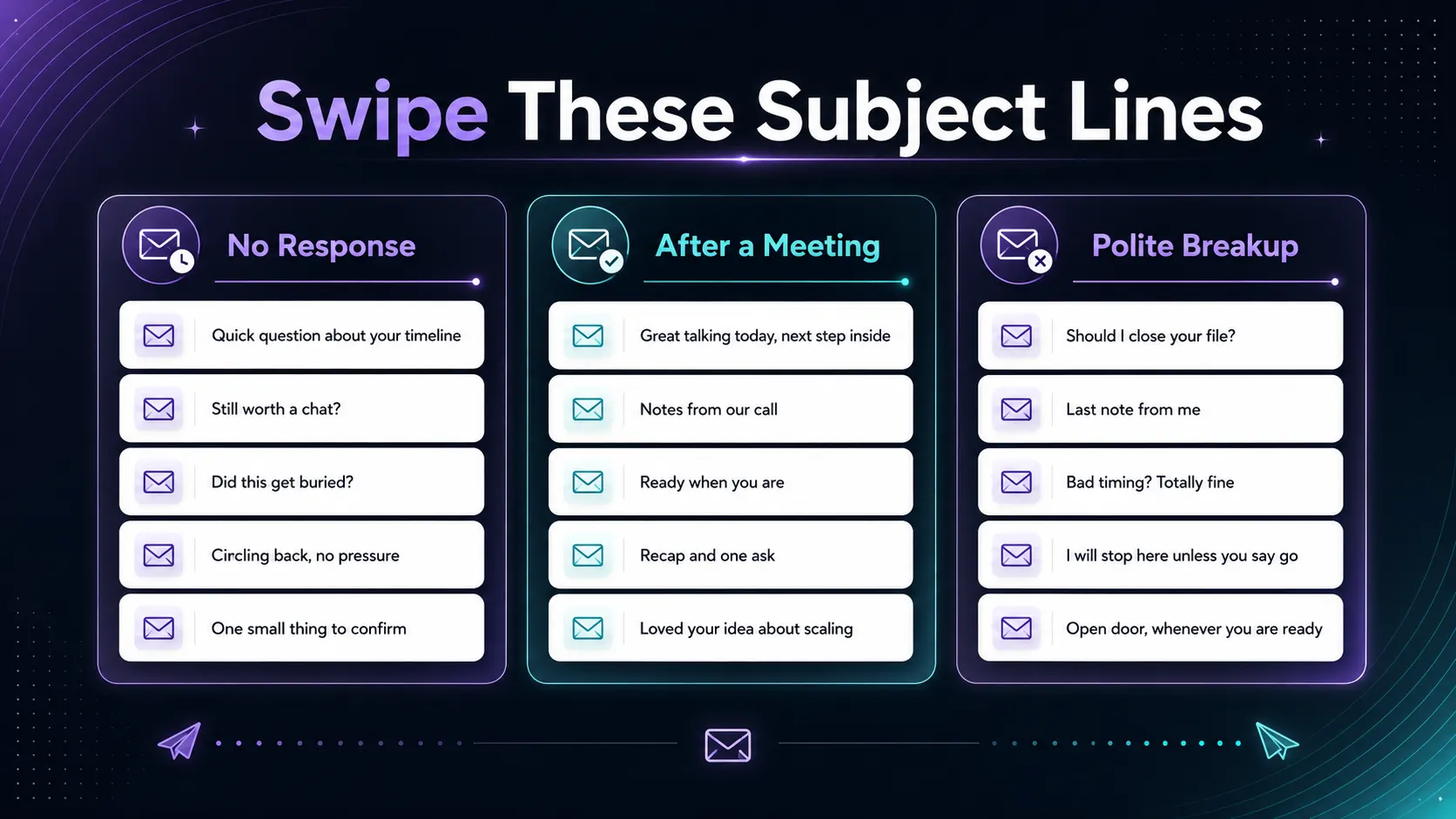
Here are fifteen follow up subject lines you can copy right now. We grouped them by scenario, so you can grab the right one fast. These subject line examples work for cold outreach and warm threads alike.
When you get no response:
- Quick question about your timeline
- Still worth a chat?
- Did this get buried?
- Circling back, no pressure
- One small thing to confirm
After a meeting:
- Great talking today, next step inside
- Notes from our call
- Ready when you are
- Recap and one ask
- Loved your idea about scaling
The polite breakup:
- Should I close your file?
- Last note from me
- Bad timing? Totally fine
- I will stop here unless you say go
- Open door, whenever you are ready
Picking the Best Follow Up Email Subject Line for Each Stage
Match the line to the moment. A cold email subject line needs curiosity, since trust is thin. A sales email subject line, by contrast, can lean on value you already showed. So a warm reply gets a softer touch, while a cold one gets a sharper hook.
Below is a quick 2026 snapshot of how different styles perform.
| Subject Line Style | 2026 Avg Open Rate | Best Use |
|---|---|---|
| Curiosity question | 47% | No response, cold email subject line |
| Personalized recap | 52% | After a meeting |
| Value nudge | 44% | Sales email subject line |
| Polite breakup | 39% | Final touch |
| Plain and direct | 41% | Busy senior buyers |
These email open rates come from recent B2B sends. So the pattern is clear. Personal beats generic, and short beats stuffed.
Subject Lines to Avoid
Some lines quietly kill your open rate optimization. So we steer clear of them. Words like "urgent" or "free" often trip filters. Meanwhile, vague lines like "checking in" bore the reader.
Avoid fake reply threads, such as "RE:" on a brand new email. It feels like a trick, and trust drops fast. Similarly, avoid all caps and stacked emojis. They scream automation, not a real person.
A catchy follow up subject line still needs honesty. So we never bait. That is to say, the promise inside must match the words outside. Otherwise your reply rate falls, even when opens climb.
Also skip the guilt trip. Lines like "why are you ignoring me" push people away. So the best follow up subject line stays warm and simple. As a result, the reader wants to reply, instead of hiding your email.
Testing Your Subject Lines
Guessing is expensive. So we test instead. A simple email subject line formula gives us a base, and A/B testing tells us the winner. Split your list, send two versions, and watch the numbers.
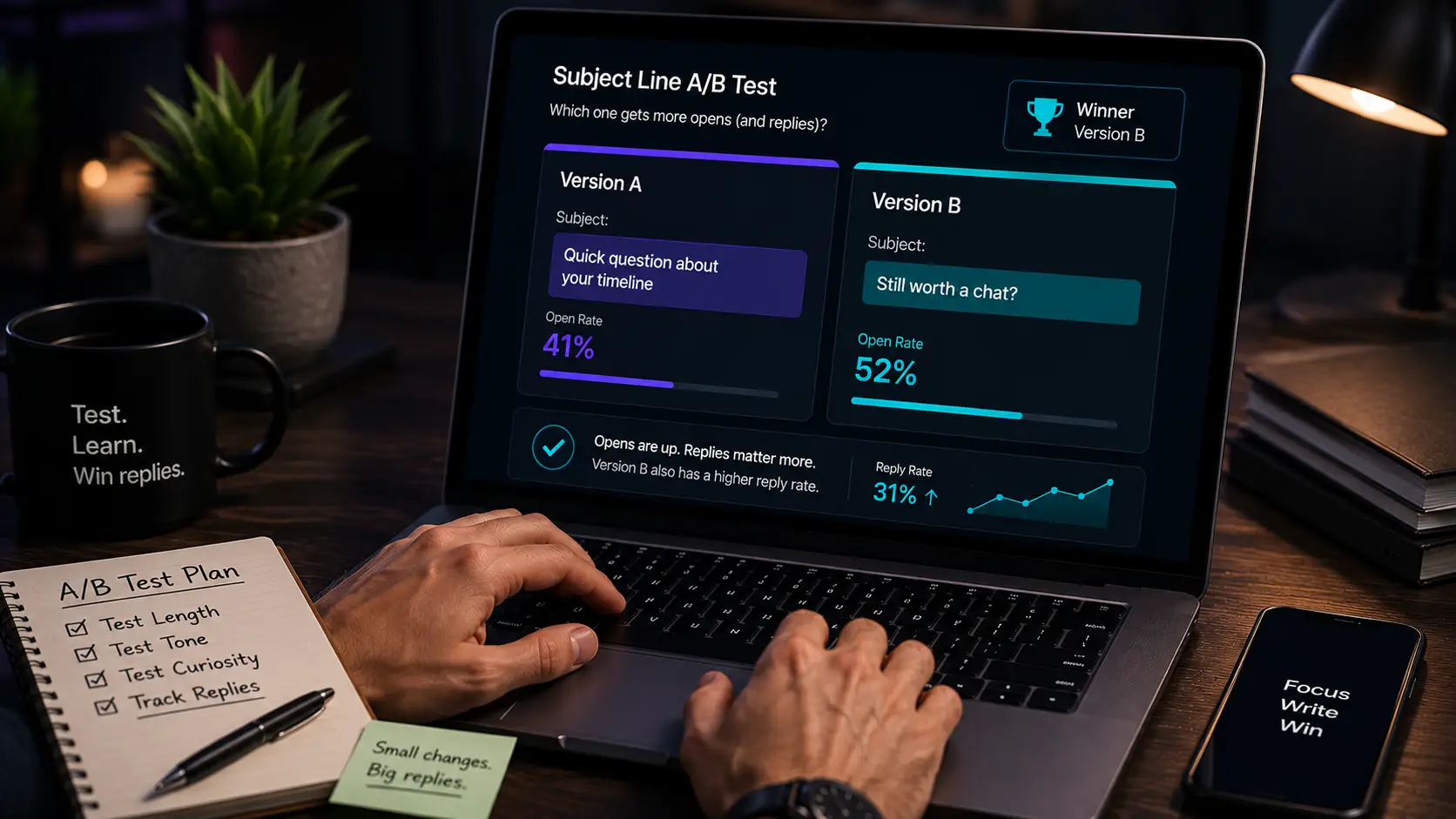
Track opens first, then replies. Opens show reach, while replies show fit. As a result, a line with fewer opens but more replies often wins the real game. So we judge by outcomes, not vanity metrics.
Small samples still teach us plenty. Test one variable at a time, such as length or tone. In short, keep it clean and repeat it often. This steady loop is where solid email marketing quietly compounds.
Write down what wins and why. Over time you build a swipe file of proven lines. So your next follow up email subject line starts from data, not a blank page. Meanwhile, your open rate climbs on autopilot.
Frequently Asked Questions
Conclusion
Your follow up email subject line is the smallest lever with the biggest swing. So treat it like the headline it truly is. Write for one reader, keep it short, and test with intent. As a result, more messages open, and more deals move forward.
We built these subject line examples so you can start today. So grab the swipe file, apply one, and watch your replies climb. For the full playbook, get our free follow up template kit and read the complete guide at Continuas AI.