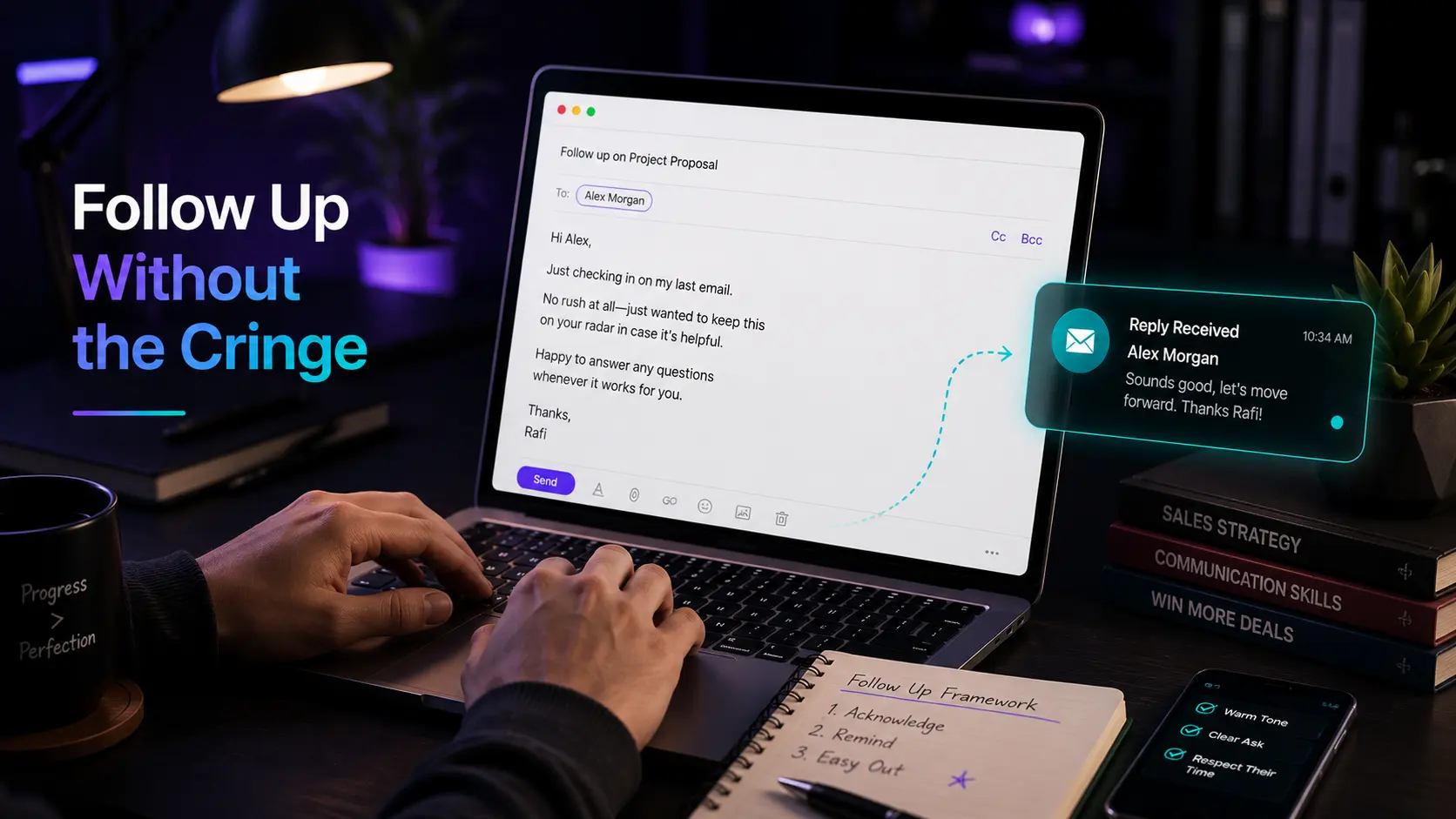
Learning how to politely follow up on an email feels harder than it should. So we stare at the screen. And the cursor blinks. And you want a reply, but you do not want to seem pushy.
So the message sits unsent, and the conversation goes cold. But here is the good news. A polite follow up email is mostly about tone, not tricks. And we will show you the exact words that work.
Why Tone Matters More Than Timing
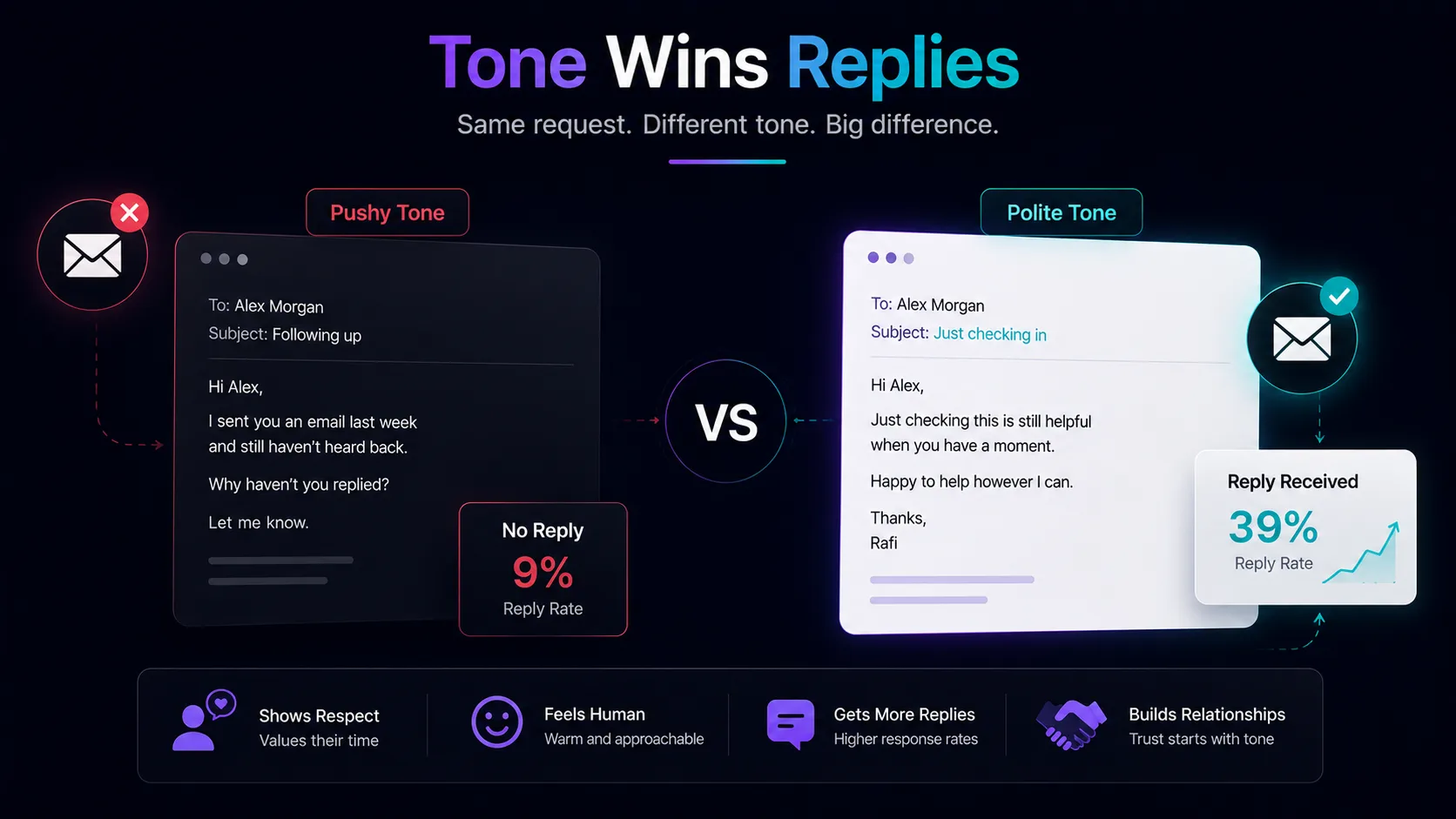
Certainly, most people obsess over when to send. But the real magic sits in how you say it. When we think about how to politely follow up on an email, tone beats timing every time. And a soft reminder email lands well when the words feel warm. But the same note can sting when it reads cold.
Think about it. Two emails, same request. One asks, "Why haven't you replied?" The other says, "Just checking this is still helpful." So the second one wins. That is workplace tact in action.
Likewise, good email tone of voice signals respect. And it tells the reader you value their time. As a result, they feel free to reply, even if the answer is a simple no. The tone in email decides almost everything.
Phrases That Sound Polite (and Ones That Don't)
To clarify, small words carry big weight. So a friendly follow up email uses soft openers. But a pushy one uses blame. So the real answer to how to politely follow up on an email starts with your first line.
Here is how the follow up phrasing changes the whole feeling. Recent numbers make the gap clear.
| Phrase Style | Example Opener | Avg. Reply Rate (2026) |
|---|---|---|
| Pushy | "Why no response?" | 9% |
| Neutral | "Following up on my last email" | 22% |
| Warm and polite | "No rush, just keeping this handy for you" | 39% |
| Value first | "Sharing one more idea that might help" | 45% |
And the data speaks loudly. A courteous email nearly doubles your reply odds. So a respectful email tone is not just nice. In short, it is the fastest way to get answers.
How to Politely Follow Up on an Email: A Simple Framework
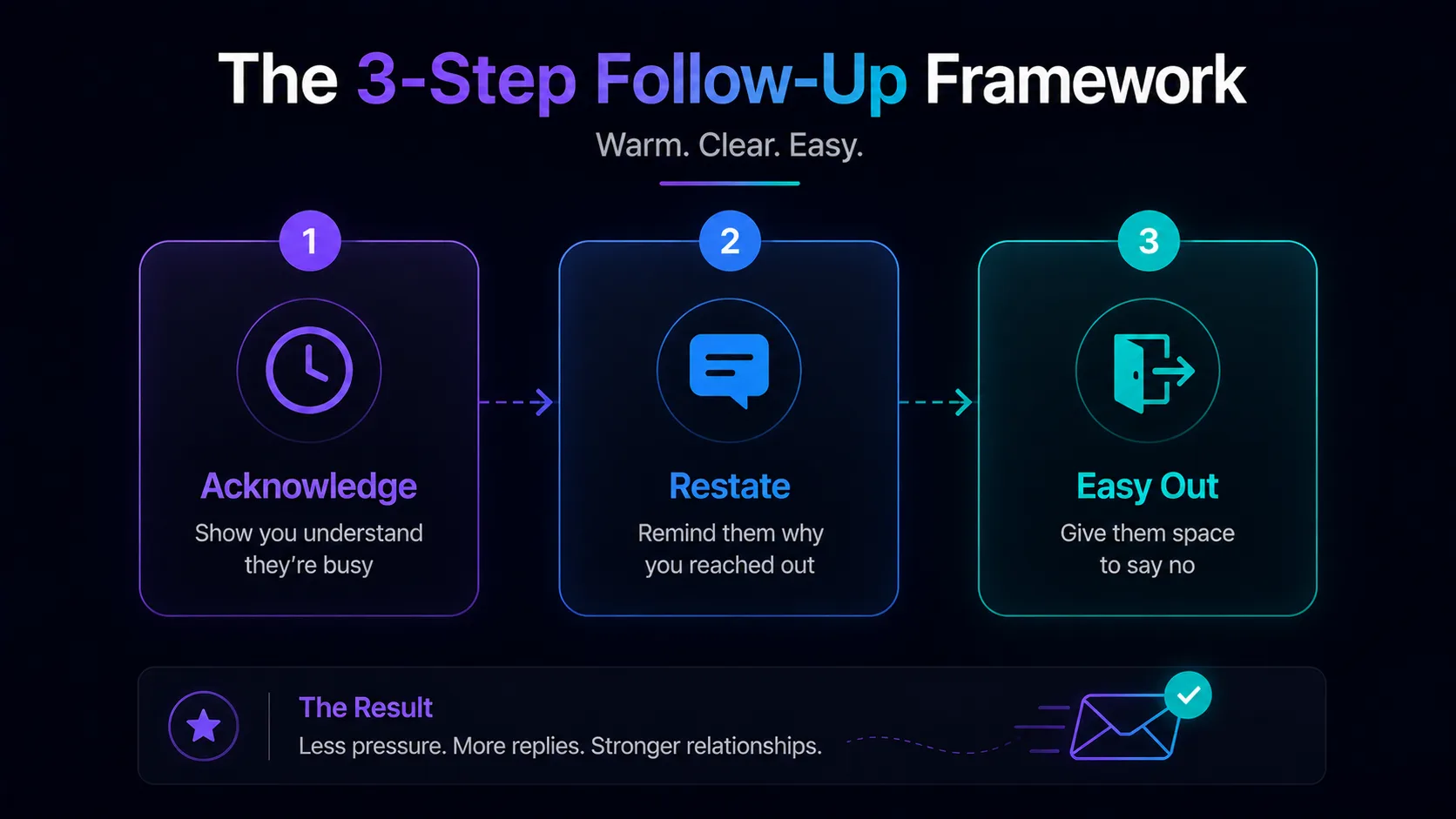
Every strong follow up shares one simple shape. So the secret to how to politely follow up on an email is a short, repeatable routine. So we break it into three easy moves. Master these, and the awkward feeling fades fast.
Acknowledge Their Time
Start by showing you get it. After all, people are busy. So a quick line like "I know your week is packed" works wonders. And this small habit turns a gentle follow up email into a courteous note. And it sets a warm tone right away.
Restate the Purpose Briefly
Next, remind them why you wrote. But keep it to one sentence. Do not make them scroll back to hunt for context. And a tactful follow up respects their memory and their inbox. So they can reply in seconds, not minutes.
Offer an Easy Out
Finally, give them room to say no. Certainly, this feels backward, but it works. Try, "If now is not the right time, just let me know." A non-pushy follow up removes all pressure. As a result, more people reply, and your professional relationships stay warm.
Polite Follow-Up Examples for Different Situations
Different moments need different words. But the kind tone stays the same. So these templates show how to politely follow up on an email in real life.
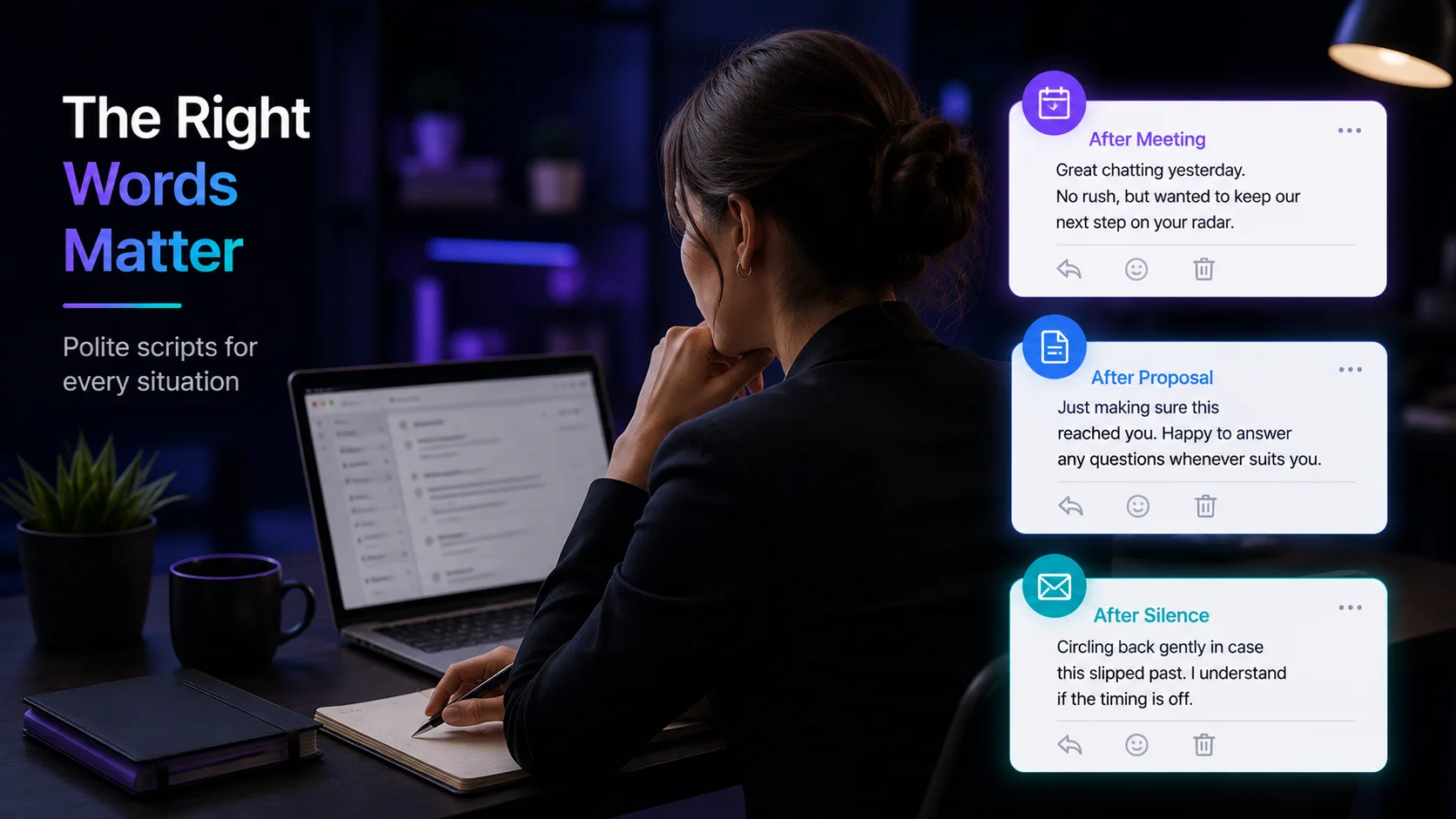
- After a meeting: "Great chatting yesterday. No rush, but I wanted to keep our next step on your radar."
- After a proposal: "Just making sure this reached you. Happy to answer any questions whenever suits you."
- After silence: "Circling back gently in case this slipped past. I fully understand if the timing is off."
Want more ready-made scripts? Our follow-up template library breaks down dozens of real situations. You can also grab our free email tone cheat sheet for the full swipe file.
Following Up Politely Without Sounding Passive
Polite does not mean weak. In addition, you can be warm and clear at once. So the trick is to stay direct while staying kind. That is the heart of how to politely follow up on an email without shrinking your ask.
Skip phrases like "sorry to bother you." However, they weaken your message. Instead, own your request with a calm, professional way to follow up. But say what you need in plain words.
And this is where good business etiquette shines. Above all, a confident yet courteous tone builds trust. And trust keeps deals alive long after the first send.
Meanwhile, if chasing replies feels draining, the right tool helps. Continuas drafts warm follow ups in your own voice and sends them at the perfect moment. So nothing slips, and you never sound robotic.
Frequently Asked Questions
Conclusion
Knowing how to politely follow up on an email is a skill, not a gift. And anyone can learn it. So lead with warmth. Then keep it short. Offer an easy out.
Do these three things, and your reply rate will climb. Now you know how to politely follow up on an email the human way. A polite follow up costs nothing but a little care. So the next time a message goes quiet, do not panic. Just follow up, politely, and watch the conversation wake back up.