
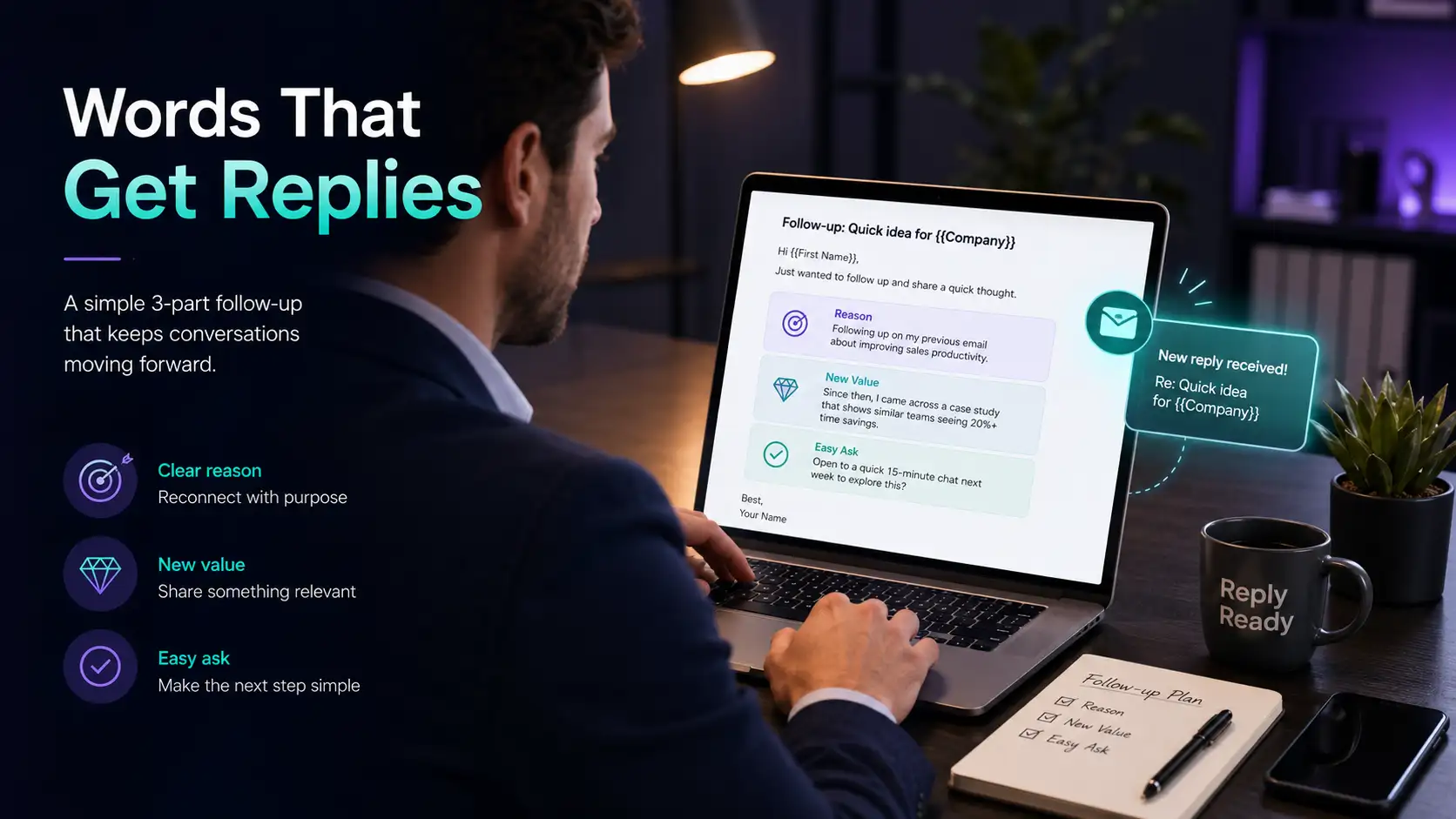
Knowing what to say in a follow up email is the difference between a warm reply and total silence. Most notes fail on the words, not the effort. We have watched strong deals stall because the message rambled or begged. So the wording has to earn both the open and the answer. And that work starts with a simple plan.
Good follow up email wording feels human and light. It respects time, and it gives the reader a reason to reply. So this guide shows what to write in a follow up email for every stage. We keep it plain. We keep it useful. And we hand you follow up email phrases you can paste today.
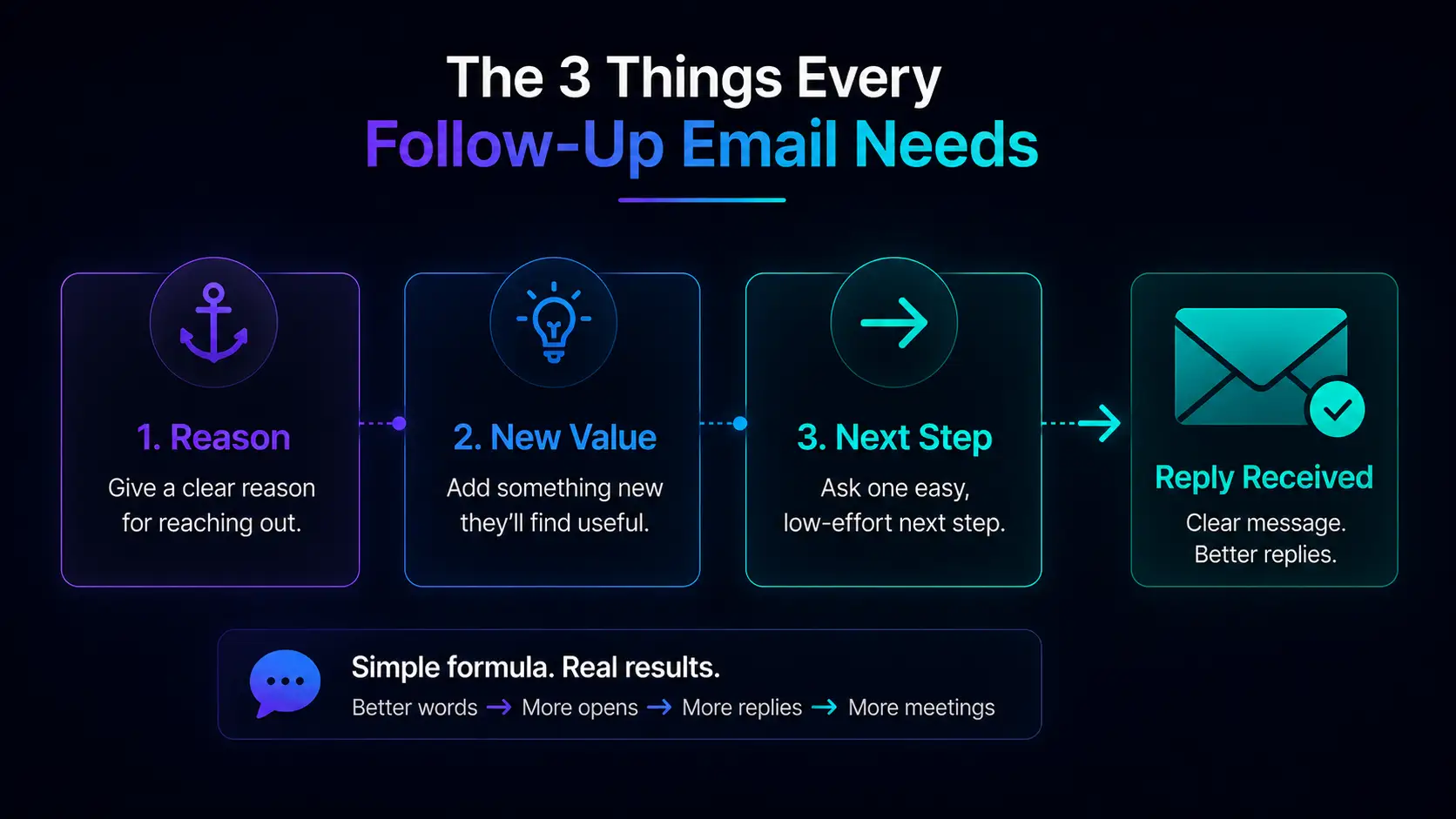
The 3 Things Every Follow-Up Email Needs
Strong follow up email content rests on three parts. Miss one, and the reader stalls. So we build every message on the same simple frame. And that frame keeps our business communication clear and quick.
Here is the short version of what to say in a follow up email. Give a reason, add something new, and ask one easy next step. So the reader gets clarity, not clutter. And each part does one job, which keeps the note tight.
A Reason for Reaching Out Again
Give the reader a real reason, not a vague nudge. So we anchor to something concrete. Reference the last call, a shared deadline, or a promise you made. As a result, the message feels earned, not needy.
A weak reason reads like pressure. A clear one reads like help. So we lead with their goal, not our quota. To clarify, we remind them why this thread matters to them. That small shift lifts replies fast.
When you plan what to say in a follow up email, start with this part. The reason sets the tone for the whole note. So we make it warm and specific. And we tie it to a moment the reader already remembers.
Something New (Not Just "Checking In")
Never send an empty ping. Instead, bring one fresh thing to the table. Share a resource, a quick idea, or a short answer to their earlier question. So the reader gets value before they give a reply.
This is where good email content strategy shows up. A new angle keeps the thread alive. However, keep it tight. One useful item beats a wall of text. In short, add value, then get out of the way.
The best fresh hooks solve a small problem. Send a template, a data point, or a link they can use in a minute. So the reader feels helped, not sold. And that goodwill makes the next reply far easier to earn.
A Clear, Low-Effort Next Step
End with one easy ask. Two questions confuse the reader, so we pick one. Make it a yes or no when you can. As a result, replying feels like a tap, not a task.
Strong follow up email structure always closes with direction. So we never leave the reader guessing. We suggest a time, a link, or a simple choice. And that clarity turns polite interest into a booked next step.
A good ask lowers the cost of replying. So we do the work for them. Offer two time slots, not an open calendar. Send the link, not a request to find it. As a result, the reader says yes in one line, and the deal keeps moving without friction.
What to Say in a Follow Up Email After a Meeting
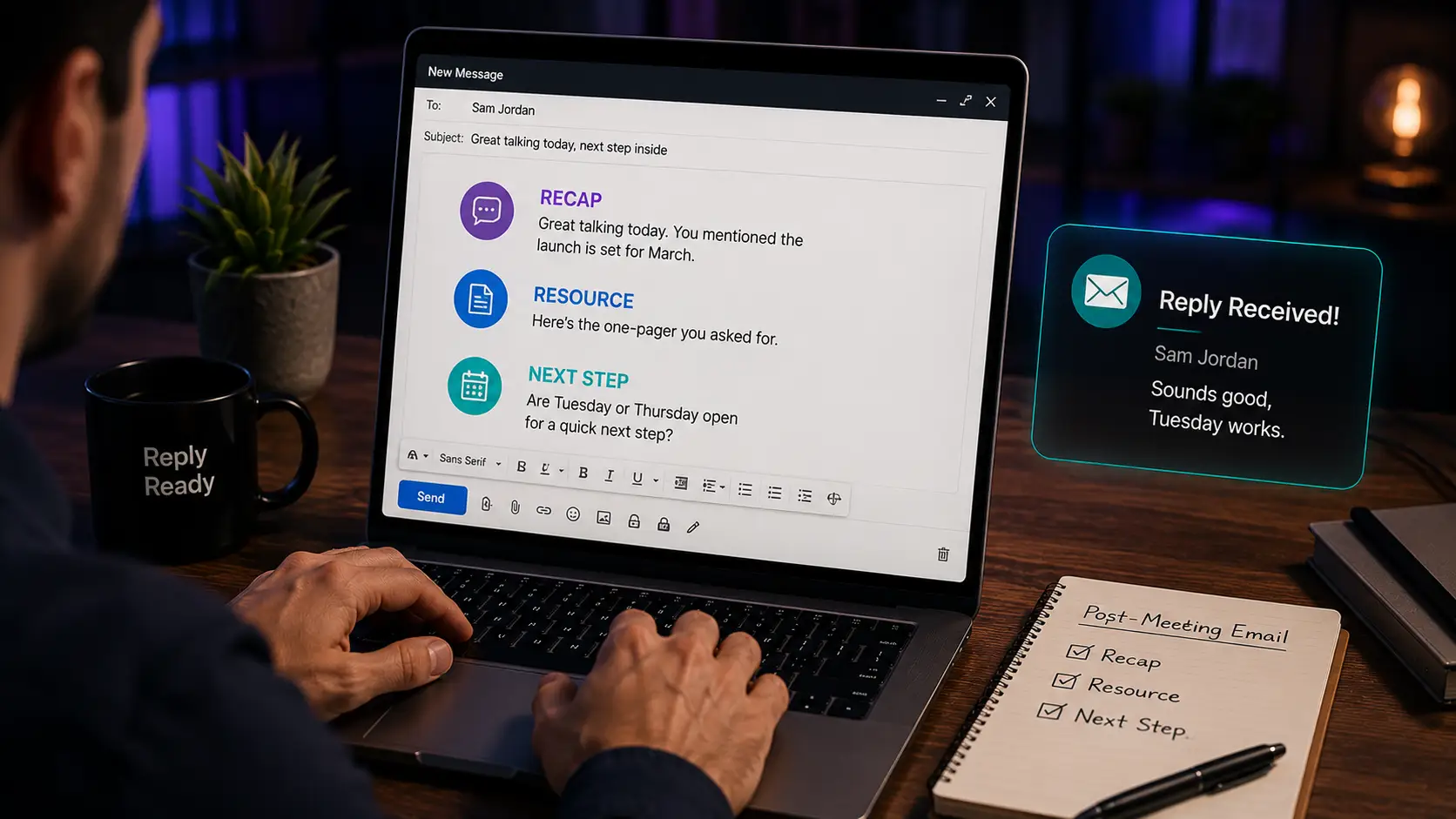
A post-meeting note works best while the talk is fresh. So we send it the same day. We thank them briefly, and then we recap the one thing that mattered most. After that, we point to the next step.
Here is what to include in a follow up email after a call. Add a short recap, a clear action item, and a date. Skip the long transcript. Meanwhile, keep the tone warm and human, since you just spoke.
Try this professional phrasing as a starting point. "Great talking today. You mentioned the launch is set for March, so I have attached the one-pager you asked for. Are Tuesday or Thursday open for a quick next step?" So the reader sees value, a reminder, and a light ask in three lines.
Below is a quick 2026 look at how different follow up email language performs. These reply rates come from recent B2B sends, so treat them as a guide, not a promise.
| Message Type | 2026 Avg Reply Rate | Best Wording Focus |
|---|---|---|
| Same-day meeting recap | 38% | Recap plus one clear next step |
| Value-add with a resource | 31% | New angle, short and useful |
| Simple yes or no ask | 29% | One low-effort question |
| Generic "checking in" | 9% | Avoid, gives no reason |
| Polite breakup note | 17% | Warm exit, easy door back |
The pattern is clear. Specific beats generic every single time. So the words that recap and direct win, while empty pings lose.
To sum up this stage, what to say in a follow up email after a meeting is simple. Thank them, recap one point, and name the next step. So the note takes thirty seconds to read. And it moves the deal while the conversation is still warm.
What to Say After No Response
Silence is normal, not a rejection. So we stay calm and keep it short. A no-response note needs a fresh reason and a softer ask. Above all, we never guilt the reader.
We keep this section brief on purpose, since the full sequence deserves its own playbook. For the complete no-response system, read our guide on how to write a follow up email. So you get the exact cadence, timing, and templates in one place.
Still, one line helps right now. Try "Bumping this up in case it slipped past. No rush, but should I hold your spot?" So the reader feels a gentle prompt, not a nag. And that light touch often wins the reply.
The key with what to say in a follow up email after silence is warmth. So we assume good intent, and we make the exit graceful. We offer an easy yes or no. Meanwhile, we leave the door open, since timing is often the only reason they went quiet.
What to Say Instead of "Just Following Up"
The phrase "just following up" adds nothing. It gives no reason, and it wastes the subject line. So we swap it for wording that earns attention. Good sales messaging always leads with the reader.
Here are follow up email phrases that work better. Use "Quick question on your timeline" when you need a date. Use "Two options for our next step" when you want a choice. Likewise, use "Closing the loop on your request" when you promised something.
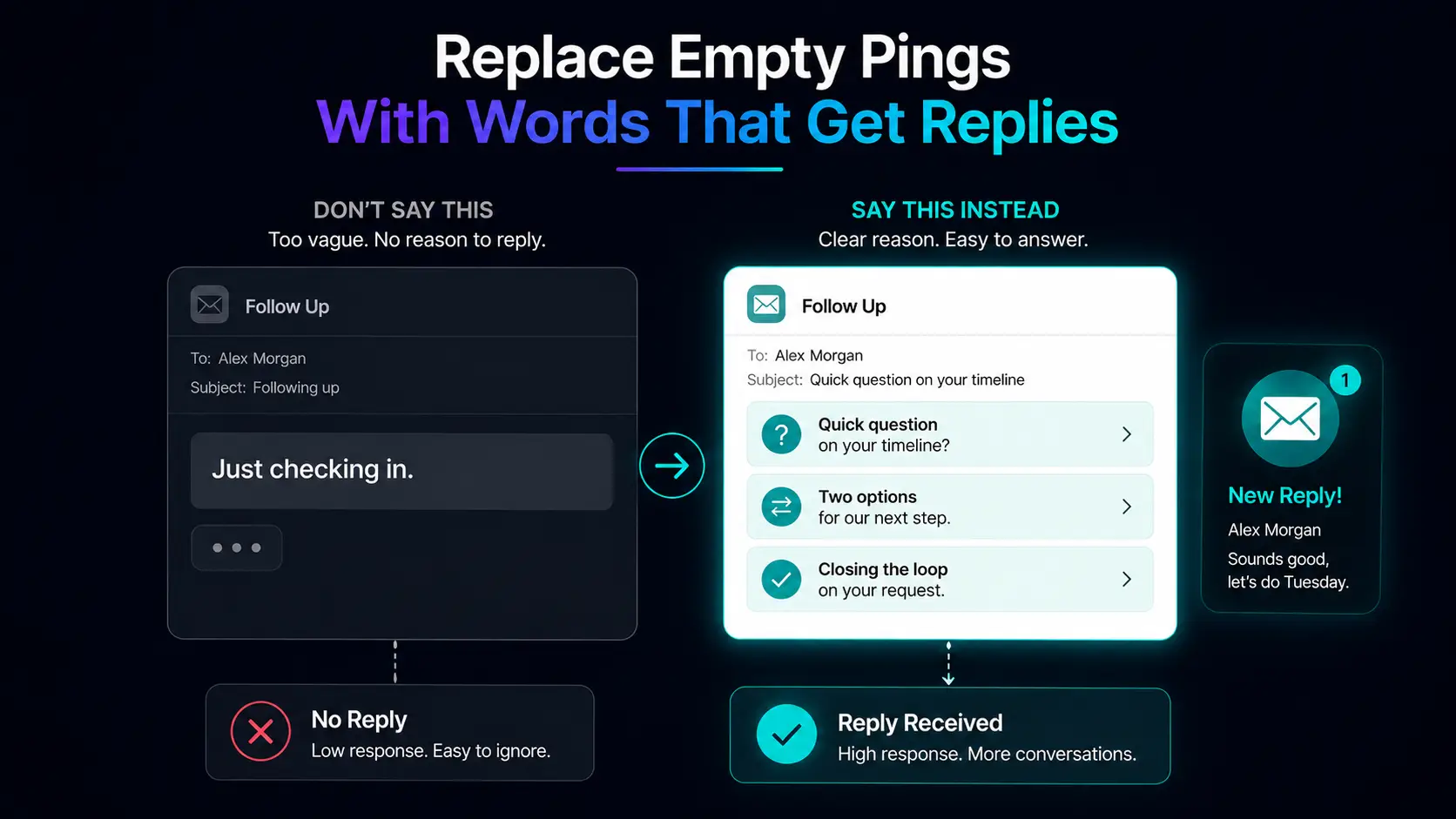
These small edits sharpen your persuasive writing without sounding pushy. Each one carries a clear reason, so the reader knows why you wrote. To sum up, replace the filler with a purpose, and your reply rate climbs.
Notice the theme behind what to say in a follow up email. Every line points back to the reader and their goal. So the words feel like service, not sales. And that reader-first habit is the single biggest driver of steady, honest replies.
One more tip on email talking points. Match the phrase to the stage. A warm lead gets a friendly nudge, but a cold one needs a stronger hook. So the right words depend on where the reader stands.
Keep a short swipe file of these lines. Over time you learn what to say in a follow up email for each type of reader. So your wording gets sharper with every send. And your team stays consistent, since everyone pulls from the same proven phrases.
Frequently Asked Questions
Conclusion
Knowing what to say in a follow up email comes down to three moves. Give a reason, add something new, and ask one easy next step. So every note stays short, warm, and clear. As a result, more threads wake up, and more deals move forward.
We built these talking points so your professional writing does the heavy lifting. So grab our free follow up template kit at Continuas AI, apply one line, and watch your replies climb. And keep the words about them, not you.